Hauerwas on the Church “Standing against the powers we confront”

We continued working through Stanley Hauerwas’s essay, “Discipleship as a Craft, Church as a Disciplined Community.” You can listen to the audio HERE.
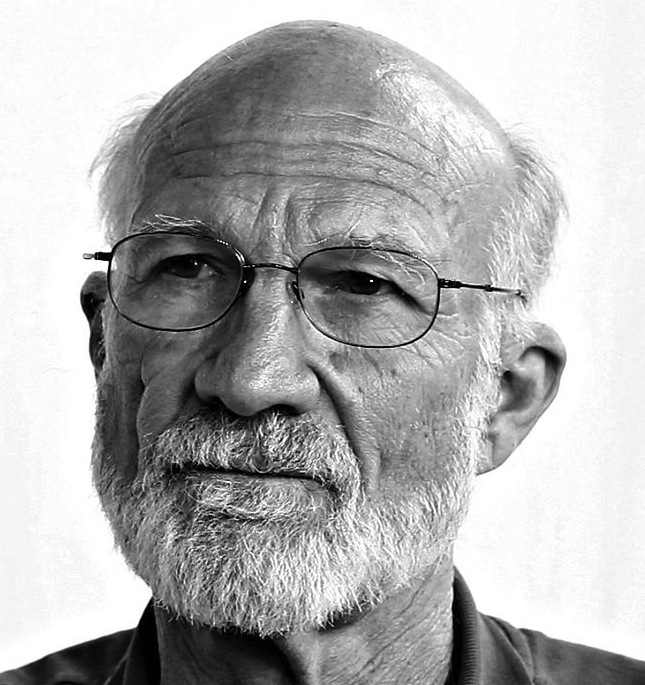
Hauerwas is talking about the church of our age (he’s writing in 1991, but it seems still applicable 34 years later) focusing first on being a “community of care.” Because our initial (and primary) focus is on being “caring” we lack the ability to “build the church as a community capable of standing against the powers we confront.”

We spent most of our time today looking at “powers we confront.” We saw that while we can easily name the world, darkness, evil, and media as some of those “powers,” those powers are not just “out there.” There are significant ways Christians/churches have been infected by these powers. Too often we are blind to the ways we are infected. As we proceed in Hauerwas’s essay, we’ll see that becoming a “disciplined community” is a requirement for gaining the discernment we need to know what we’re confront, where it is, and how we do our confronting.

We looked at two verses in the Old Testament, Genesis 15:6 and Psalm 106:31. Both use the language of “righteousness being credited” to someone due to an act they’ve performed. In Genesis, the actor is Abram. Confronted by the reality of his childlessness, he cries out to God. God promises progeny. Abram’s action in response is “belief.” “Abram believed God and it was credited to him as righteousness.”

Psalm 106 recites stories of Israel’s rebellion in the face of God’s faithfulness during the time of the Exodus. In v. 30-31 we read, “Phinehas stood up and intervened, and the plague was checked. This was credited to him as righteousness for endless generations to come.” We have to go back to Numbers 25 to see what exactly Phinehas did that was “credited to him as righteousness.” Their we see his zeal for God and God’s honor led him to pick up a spear and skewer two blatant sinners. This story of zeal for God and the righteousness it produced was later significant in the self-understanding of the Maccabees and those who looked to them as heroes.

The person we know as Paul the Apostle was zealous for God. In his days as Saul of Tarsus he was zealous in the way of Phinehas, seeking righteousness by punishing those who were dishonoring God and leading Israel astray: Christians. After running into Jesus on the road to Damascus he shifted to a different way of righteousness, the way of Abraham, exemplified in the way of Jesus. Paul lays this out most explicitly (but not entirely explicitly) in Philippians 3. Both the ways of Abram and of Phinehas are biblical. Both are approved of in the Old Testament. It’s only in Jesus that we see the way of zeal becoming a way of taking up a cross, choosing suffering, and dying. Like Abraham, Jesus – and Paul – were in places that only the work of God could bring life out of death.


Posted in Bible, Christianity, Discipleship, Ecclesiology, Stanley Hauerwas, Violence | Tagged , , , , | Leave a comment

God’s Passion for People

In the book of Jonah we see God’s passion for people. That passion is demonstrated not just on behalf of “his own” people Israel, but even on behalf of their enemies in Nineveh, the capital of the Assyrian Empire. The book closes in chapter 4 with God showing even his passion for the reluctant prophet Jonah.

Posted in Bible, Doctrine, Evangelism, God, Jesus, Love, Old Testament | Tagged , , , | Leave a comment

Three Simple Rules?

Since I’m working on a piece on Wesley’s General Rules I reread Rueben Job’s book Three Simple Rules: A Wesleyan Way of Living yesterday afternoon. It’s a tiny book –  fewer than 70 pages. It’s easy to read in a single sitting. I’ve long grumbled that Job oversimplifies the General Rules, especially the first. I’ll say more about why I grumble another time.

Here’s the original language:

There is only one condition previously required of those who desire admission

into these [Methodist] societies: ‘a desire to flee from the wrath to come, and to be saved from their sins.’ But wherever this is really fixed in the soul it will be shown by its fruits. It is therefore expected of all who continue therein that they should continue to evidence their desire of salvation,

First: By doing no harm, by avoiding evil of every kind, especially that which is

most generally practiced, such as: [here follows numerous examples]

Secondly: By doing good [again followed by examples]

Thirdly: By attending upon all the ordinances of God [and again, followed by examples]

Job’s summary of these “simple” rules is:

Do no harm

Do good

Stay in love with God

The big change in languages comes with the third rule. Job’s simplification will probably strike you as an obvious improvement. After all, what does “attending upon” mean? I checked Google NGram and wasn’t surprised to see that the usage of this phrase peaked long ago – back when John Wesley’s father was a child:

The archaic phrase means “commit yourself to doing.” Job is correct that doing the “ordinances” listed in the third rule –  worship, prayer, scripture study, accountability, fasting, etc. will sustain love for God. The General Rules, whether read in the “original” or in Job’s “simplification” shows us ways we can “stay in love with God.” If you want to “stay in love with God” are you taking up these disciplines of the faith? Are they part of your life? If they’re not, they can be.

Posted in Discipleship, John Wesley | Tagged , , , , | Leave a comment

Discussion on Hauerwas on Church & Discipleship

Tomorrow is Stanley Hauerwas’s birthday. Coincidently, we began reading his 1991 essay, “Discipleship as a Craft, Church as Disciplined Community” today. This essay from The Christian Century can still be found online HERE.

We got through most of page 1 of my handout today. This included the first paragraph of Hauerwas’s essay along with my own commentary. You can find the recording HERE.

Posted in Culture, Discipleship, Doctrine, Stanley Hauerwas, Theology, United Methodism | Tagged , , , , , , , | Leave a comment

The Treachery of Memes

I first noticed this meme circulating several years ago:

The first assumption is that the people on the left are, well, leftists, and that being “of the left” means desiring “more government.” Given this assumption, the meme, produced by an opponent of that desire associated with the left, attempts to be a reductio ad absurdum of the leftist position. That is, “Leftists say they want more government. Here is a picture of what ‘more government’ looks like. We’ll see how long they hold to such an absurd position.”

That’s the first assumption.

There’s a second assumption worth consideration. That’s the assumption common to at least some opponents of the left that the legitimate purpose of government is maintaining order. Since there are forces that seek to destabilize order, for example, criminal, terrorists, enemies, and (illegal?) immigrants, we need government – and sometimes more government – to oppose those forces of disorder and to impose order. We identify those legitimate functions of government as being carried out by our military and various police agencies.

It may be the case that Max Weber’s claim that government should have the sole legitimate claim to use of violence is very popular. It is not the case that this account of the purpose of government is universal.

I’m not one of those protesting for “more government,” but my assumption is that those who are are not defining government and its proper functions the same way as their opponents. They are likely putting value on the role of government as an agent producing positive liberty (the capacity to do things, individually and corporately) and not just negative liberty (the lack of restraint).

Providing schools, clean water, reliable electricity, and a road system are a few aspects of a government system that produces positive liberty. There is nothing in this that entails an increased number of armed agents deployed to (legitimately) employ violence.

So yes, the meme may get a laugh from those who take extending negative liberty to be the only legitimate function of government, but it misses the prior and most important question, “What is government for?”

Posted in Current events, Philosophy, Politics, Uncategorized | Tagged , , , , , , , , | Leave a comment

Lockean Self-Ownership

Do you think many Americans today agree with this claim of John Locke?

“Every Man has a Property in his own Person. This no Body has any Right to but himself. The Labour of his Body, and the Work of his Hands, we may say, are properly his.”

This belief in “self-ownership” is hard for us to shake. And yet we who claim to follow Jesus are confronted by biblical teaching that we who are baptized belong to God and to each other, since we are baptized into the Body of Christ together. Do you feel the tension between our modern Lockean assumptions and our claimed biblical convictions?

Posted in Culture, Discipleship | Tagged , , , | Leave a comment

The Gospel of John, Chapter 4

We continue working through the Gospel of John

John 4:1-12

John 4:13-26

John 4:27-42

John 4:43-54

Posted in Bible, Gospel, Jesus | Tagged , , , , | Leave a comment

Can We Argue with God?

How would Jonah’s story have been different if he’d taken time to engage with God, to ask questions and even to argue? Could he have come out the other side in a better relationship with God and with a better grasp on God’s character and intentions? Could he have learned to love what God loves?

Posted in Bible, Discipleship, Discipline, Old Testament, Prayer | Tagged , , | Leave a comment

Looking Up

I like watching the sky, seeing the interplay of light and darkness. Sunday evening was an unusual mixture, different sights in each direction.

In the west, there was the sunset.

In the south, a storm approached. Here is the sequence showing it coming closer.

In the east there were anticrepuscular rays.

Posted in Nature, photography | Tagged , , , , , | 1 Comment

Wrestling in Prayer

God, the creator of the universe, invites us to join in what he’s doing. One key way we do that is in prayer. God lets us see people and situations from his point of view, fills us with love for people, and moves us to action for them.

Posted in Bible, Christianity, Ministry, Prayer | Tagged , , | Leave a comment