Thinking about “Once Saved Always Saved” as a Wesleyan

In our culture Baptists may be the loudest proclaimers of the teaching, but it’s rooted in the Calvinist/Augustinian teaching of the “Perseverance of the Saints.” If salvation is ONLY a matter of what God does, if God’s grace is irresistible, then it is pure logic that someone who is now saved is someone God wanted saved and also someone God wants to be saved forever. There is nothing a person can do to resist God’s effectual will.

That reasoning is very attractive. It’s simple, it attributes maximal power to God, it comforts us regarding not merely ourselves but our friends and loved ones who were (so we believe) “saved” at one time, but later seem to turn away.

Wesleyans have, for the most part, not only failed to be heard in the wider Christian culture, but we’ve also failed to shape the theology of our own people. We’ve failed to show how salvation as pictured in Scripture is more (not less) than flipping a switch regarding our eternal destination. Sanctification (holiness, Christian perfection) is PART of salvation, not just something that may or may not come on top of it, like sprinkles on a cupcake. Too often in recent generations we’ve either preached a tepid moralism (since the stringent moralism of previous generations seemed mean) or preached a message of salvation that was just like we might hear from our Baptist neighbors.

The phenomenon of a person who at one point appears to be “saved” but who later doesn’t is common to all theological traditions. Those in the Methodist tradition may say the person “backslid” or “lost their salvation.” Those who adhere to the Calvinist/Augustinian tradition may say the person “was never really saved to begin with,” or “they were just playing games with God.”

There is no comfort in this “once saved, always saved”/”they were never really saved to begin with” teaching. Assurance of salvation is impossible, since at any given moment it might be that whereas I THINK I am sincere in my faith, I am REALLY just “playing games with God” or “fooling myself.” This is why the evangelistic appeals that demand that we “know that we know that we know” that we are saved are ultimately not very helpful.

My confidence is in Jesus and his promises, not in my own faith or in my self knowledge. I’m a sinner. I know I can be wrong (my sin has epistemic consequences, as some would say). I KNOW Jesus will never cast me away, decide he’s tired of me, or reject me. If I waver, or turn away, I have scriptural evidence that he’s not giving up on me, that he’s never comfortable in my walking away. But I also have scriptural evidence that he doesn’t compel or coerce me to go the right way.
Posted in Global Methodist Church, John Wesley, Salvation, Theology | Tagged , , , , | Leave a comment

Jesus, Thine All-Victorious Love

Jesus, Thine All-Victorious Love is by Charles Wesley. The tune is Azmon, the same tune used for Wesley’s O For a Thousand Tongues to Sing, a hymn we sing with some regularity, so at least that will be familiar. Here are the words:

Jesus, thine all-victorious love

shed in my heart abroad;

then shall my feet no longer rove,

rooted and fixed in God.

It’s useful to note that the word “shed” here in the first stanza is a verb. We’re praying, asking Jesus to “shed,” to “pour out” his “all-victorious love” in my heart, wherever I am. The expected result of Jesus pouring out this love in my heart (Wesley is drawing on Romans 5:5) is that “my feet no longer rove,” no longer flit from this attraction to that, but are “rooted and fixed in God.” The sentiment is very similar to Robert Robinson’s words in the third stanza of Come, Thou Fount of Every Blessing.

O that in me the sacred fire

might now begin to glow;

burn up the dross of base desire

and make the mountains flow!

Two desires are expressed in this stanza, both building on volcanic imagery. Wesley is drawing a close connection between “love,” “fire,” and the Holy Spirit. Now we are singing/praying that Jesus’ all-victorious love will, like a fire, burn up all the “base desire,” all our desires that aim for less than God. When it comes to the phrase about the mountains flowing, I think he’s pointing at Jesus’ comment about how faith the size of a mustard seed can say to “this mountain,” “get up and be cast into the sea.” The power of Jesus’ love operative in us is powerful enough to remove any impediment.

O that it now from heaven might fall

and all my sins consume!

Come, Holy Ghost, for thee I call,

Spirit of burning, come!

Early Methodism had a strong conviction that the power of God was sufficient to defeat sin in our lives. This went beyond the conviction that our sins would be forgiven so we could be reconciled to God. Wesley and the early Methodists believed that through the power of the Spirit we could defeat the presence and power of sin in our lives now. That’s the experience we are praying for in this third stanza.

Refining fire, go through my heart,

illuminate my soul;

scatter thy life through every part

and sanctify the whole.

The song ends with a request that the work of God permeate every aspect of our being. More than just having sin rooted out and eradicated, there is something positive happening as well: God himself, in the person of the Holy Spirit, is taking up residence in us. Our prayer here is one of opening ourselves to him without reservation, without saying to the Spirit, “Here, you can go into these parts of my life, but leave those other parts alone.

Posted in Holiness, Love, Perfectionism, Worship | Tagged , , , , | Leave a comment

Favorite Nonfiction of 2023

Here are the top nonfiction books I read this year.

Joshua McNall, Perhaps
Adam Hochschild, American Midnight
Matthew Emerson, He Descended to the Dead
Fleming Rutledge, Not Ashamed of the Gospel
Alan Kreider, The Patient Ferment of the Early Church
Carmen Imes, Being God’s Image
Matthew Bates, Why the Gospel?
Lucy Peppiatt, Unveiling Paul’s Women
Justin Earley, Habits of the Household
Kavin Rowe, Leading Christian Communities
Patrick Lencioni, The Six Types of Working Genius

Posted in Uncategorized | Leave a comment

Hardy Memorial Methodist Church History

Before she died in 2004, long-time member Virginia Hobbs shared oral history about the congregation. Here is audio from that history. We’d like to make a video with it and could use help from people who would listen and provide or suggest photos that could fit with what she’s telling about in each segment. Let me know if you’d like to help.

Here are the audio links:

Part 1

Part 2

Part 3

Part 4

Part 5

Part 6

Part 7

Posted in Church History, Global Methodist Church, Local church, United Methodism | Tagged , , , , | Leave a comment

All Hail the Power of Jesus’ Name

Have you considered the fourth stanza of the hymn, All Hail the Power of Jesus’ Name?

Let every kindred, every tribe

On this terrestrial ball,

To him all majesty ascribe,

And crown him Lord of all.

When we read the story of the call of Abraham in Genesis 12 we see that God makes Abraham a promise. God will bless him and through him and his family bless all nations on earth. We see this promise echoed to Abraham’s descendants in the Exodus when God tells Israel that although the whole earth belongs to him, they will be his treasured possession out of all nations and will be a kingdom of priests and a holy nation. You may have heard Israel described as “God’s chosen people.” We see that chosenness and its purpose right there. Israel was God’s chosen people to reach all the rest of us.

We see the result of that truth in this stanza. While the hymn appeals to “Ye chosen seed of Israel’s race” in the second stanza, by this point we’re looking at the fulfillment of God’s purposes. We see this prospectively in Jesus’ Great Commission when he says, “All authority in heaven and earth has been given to me. Therefore go and make disciples of all nations.” We see the outcome in Revelation 7:9-10 – “After this I looked, and there before me was a great multitude that no one could count, from every nation, tribe, people and language, standing before the throne and before the Lamb. They were wearing white robes and were holding palm branches in their hands. And they cried out in a loud voice:

‘Salvation belongs to our God,

who sits on the throne,

and to the Lamb.’

By the final stanza we’re no longer addressing various groups of people, calling on them to “Hail Jesus’ name” and to “Crown him Lord of all.” Now it’s “we” – “O that with yonder sacred throng” – the “sacred throng” is those groups of people who have come together to worship. We now declare that we are joining them as we fall at his feet and “join the everlasting song” of praise to Jesus.

Posted in Hymns, Jesus, Worship | Tagged , , , | Leave a comment

Lord, I Want to Be a Christian

Do you know the song, Lord, I Want to Be a Christian? Consider the four claims we make in this simple song:

  1. Lord, I want to be a Christian
  2. Lord, I want to be more loving
  3. Lord, I want to be more holy
  4. Lord, I want to be like Jesus

The obvious thing about these claims is that they are good things for people like us – church goers – to desire. There’s nothing surprising here.

What’s consequential here is that we are publicly expressing what we want. If I say I want a cookie, what action would you expect to see me take? You’d see me acting in ways that would lead to my acquiring a cookie. That might mean that I get a recipe and start baking cookies. It might mean that I go to a grocery store or bakery and get a cookie. You would not expect my saying, “I want a cookie” to be followed by a cookie magically appearing in my hand.

Suppose I say, “I want to be more healthy.” Being healthy for me might include things like my eating and exercising habits. If I tell you, “I want to be more healthy,” there are patterns of activity you could potentially observe in my life to see if my claim that this is my desire, something I indeed want, is true. If you see me eating cheeseburgers and fries, and drinking a shake (all foods I like) at every meal and never see me exercising, you might come to think that my claim that I want to be more healthy is just a pile of meaningless words.

Look again at the claims we make when we sing this song. What kind of evidence would a person look for if they were to believe these claims of ours? What would they see in our lives that would lead them to believe that we DO

want to be a Christian, more loving, more holy, and like Jesus? Are there any actions on our part that could work toward fulfilling these desires we claim to have?

Of course, we could have a conceptual problem. It could be that we want all these things, but we have no idea what they entail. We have an idea that being a Christian is a good thing, but we don’t know how to do it. We know that love is good, but we have no clue how to be more loving. We know “holy” is a popular churchy word (and an unpopular worldly word), but we have no confidence that holiness is anything that can ever be achieved by us. And being like Jesus? We might be able to imagine growing our hair out, having a beard (whether real or fake), wearing a robe & sandals, but actually like Jesus? That’s just not something we can do. We might believe that if any of these things are going to happen God’s just going to have to do it – God’s just going to have to “strike” us with these things, because if our involvement is required, it’s just not going to happen.

There’s something important we’d be missing if we thought this way. Well, two things, but one much more important than the other. The first thing we’re missing is that each of these statements is addressed to someone in particular – and not to the person sitting next to us. In each case we say, “Lord, I want…” This is prayer language. We are talking to God. But we’re not just describing something, like we would be if we said, “Lord, there is a table over there.” When we sing/pray “Lord, I want…” we are using what is called “self-involving” language. We are saying something about ourselves to someone we consider to be our Lord. These are claims that have (hopefully) the beginnings of truth (perhaps we’re just setting out on this journey and we only know enough to begin to want to want these things), and are working there way toward being expressions of our true desires. When we realize who we are talking to, we realize there are more word implied here: “Lord, I want to be like Jesus… and I can’t do it without you… and I invite you to hold me accountable.” That is to say, we’re inviting God to look for evidence in our lives for the truth of these claims.

There’s one last thing here. Though you can pray/sing this on your own, we’ll be singing it as a congregation this Sunday. While some people who are still at the very beginning of their journey in faith may just sing the words without intending to make any claims about themselves at all, most of us will be seeking to make these as true claims. We are declaring with each other that WE want these things. We as individuals, as families, as a church, want to be Christian, more loving, more holy, and like Jesus. This is a journey we get to do together. Because we’re on this journey together, we can take action together. We can encourage each other. We can hold each other accountable and be held accountable when it comes to taking these actions. We’re not in this alone, we have others walking alongside us to help us, to teach us, to pick us up when we fall.

Here’s a nice rendition of the song:

Posted in Christianity, Discipleship, Hymns, Jesus, Prayer, Worship | Tagged , , , , , , | Leave a comment

Ask Ye What Great Thing I Know

We’re going to start our singing Sunday with Ask Ye What Great Thing I Know. Consider that word “know.” The first sense of that is the theoretical: Here is an idea, a fact, that I know. I know that Jesus Christ, the crucified and risen Son of God, “delights and stirs me,” “defeats my fiercest foes,” “consoles my saddest woes,” “revives my fainting heart, healing all its hidden smart,” is “life in life” and “death of death,” and “who will place me on his right?” We who sing know these things to be true.

But there’s another sense of “know” implied here. We see these two senses in scripture in places like Ephesians 3 where Paul prays that the Ephesian church will “know this love that surpasses knowledge.” How can you know something that surpasses knowledge? Well, consider another translation. We can take Paul to be praying that they “Experience this love that surpasses understanding.” God’s love in Christ is so great, so intense, so extensive, that we cannot ever completely understand it. But we can experience it.

Let’s apply this sense of know to our singing this hymn. “Ask ye what great thing I experience.” Sure, I know that completely ruins the poetry and musicality. Consider, however, that declaring the truth of the facts expressed in the hymn is one thing – surely a good thing! Declaring that this is our experience of Jesus, that’s something different. We don’t just know about Jesus, we know Jesus. We’ve experienced these things for ourselves.

It might be that come Sunday morning when it’s time to sing this song you might think that it’d be nice to have had this experience of Jesus, but you haven’t yet. That’s one of the advantages that comes from preparation for worship. By knowing shat song we’ll be singing you can look at it in advance. Even this very moment as you read my words – or Sunday morning as we sing the hymn – you can pray, “Lord, I want this to be my experience. I want to have this experience of Jesus and life in him. Do this work in me so that I will joyously share the news of Jesus with everyone who asks me what great thing I know, what the thing is that stirs me and excites me.”

Posted in Discipleship, Jesus, Worship | Tagged , , , | Leave a comment

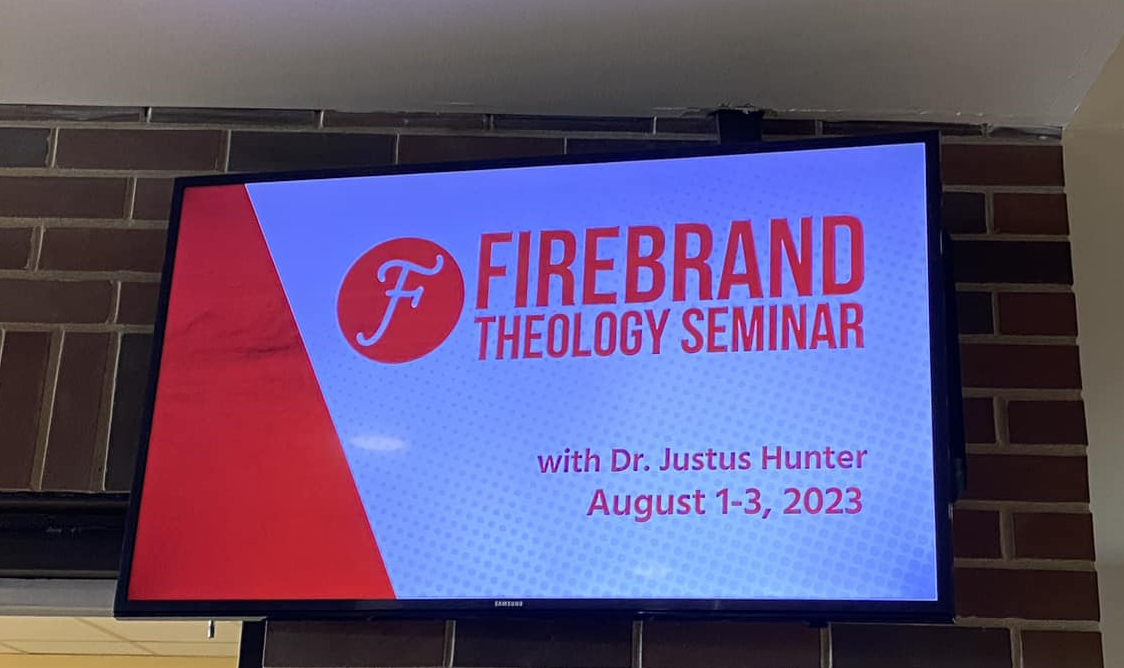
Firebrand Theology Seminar

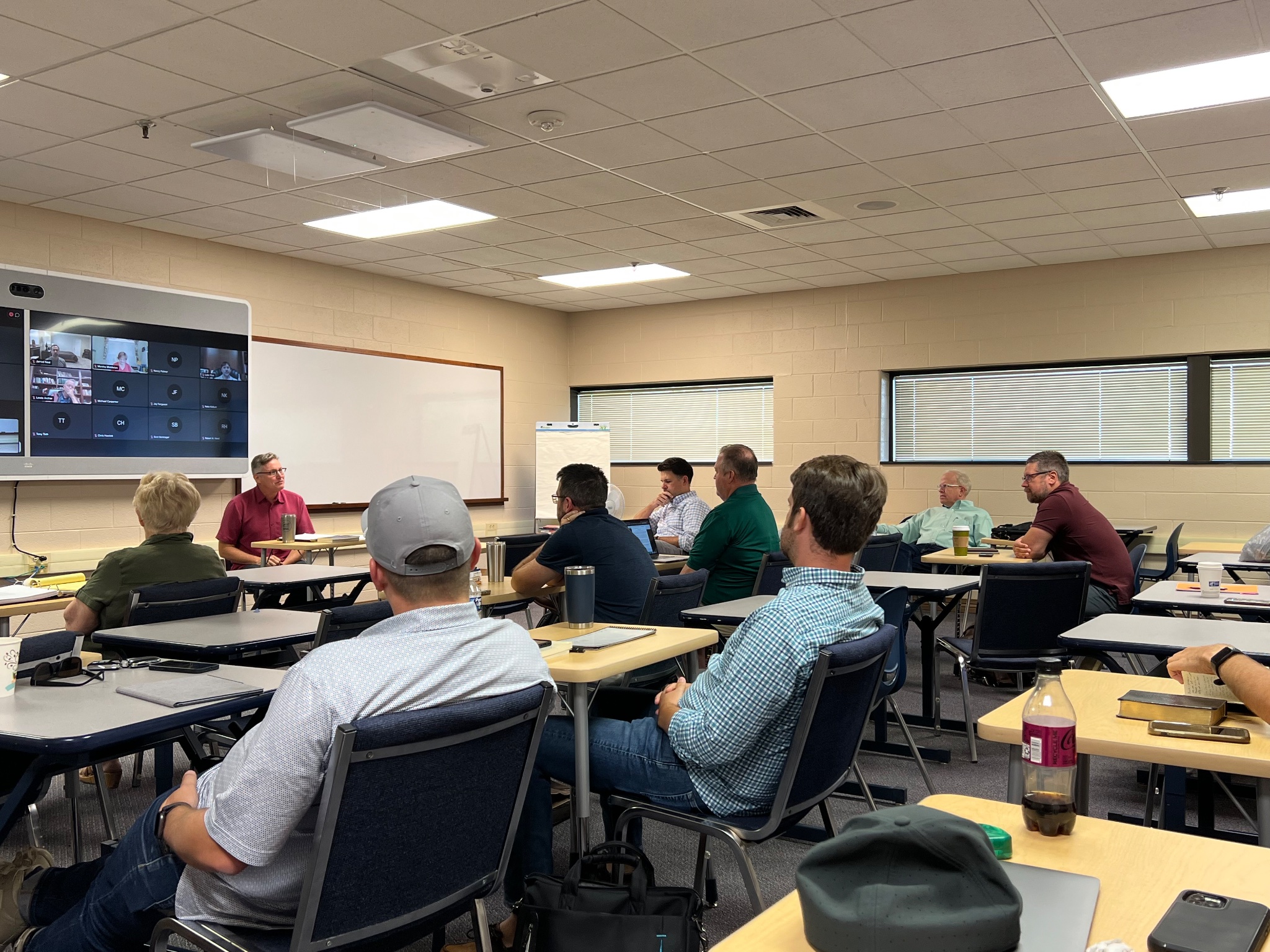
I don’t get the opportunity these days to do much deep consideration of theology, so when I learned that the Firebrand Theology Seminar would focus on the work of Billy Abraham this summer it was too good to pass up.

I think I first met Billy sometime in the 1980s. I don’t remember when it was exactly – it could have been while I was at Asbury Seminary, at a Texas Conference event, a special theology meeting, or a Good News Convo. Later (in the 90s) when I was doing my doctoral work, Billy was the external reader of my dissertation. His doing that – and the conversations we had over it – were a blessing to me. In the past 25 years I was able to reconnect with him mostly at Wesleyan Theological Society meetings. I was in the audience as one of many cheering him on when he received a Lifetime Achievement Award at Seattle Pacific University.

The seminar gave me the opportunity to review Billy’s works that I’d read over the decades – and to read some I’d missed. Of all his works, Crossing the Threshold of Divine Revelation may be my favorite. His recent four volume work, Divine Agency and Divine Action runs a close second. The basic idea of both – the claim that God is living and active (an agent) in our world – is essential to my own theology and practice of ministry.

It was also nice to get to see some old friends and to make new ones. Though more participated online than in person, I was able to meet many people that I’ve engaged with online.

Posted in Theology | Tagged , , , , | Leave a comment

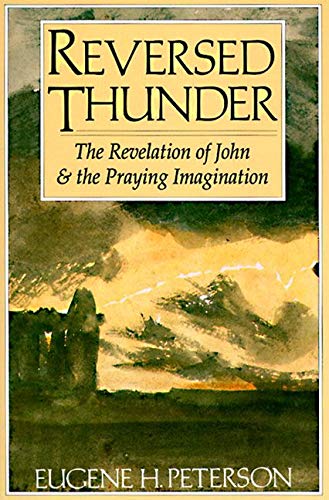
Study of Reversed Thunder

We’re doing a study of Eugene Peterson’s book on Revelation, Reversed Thunder. Below you can find the audio of our meetings:

  • Week 1
  • Week 2
  • Week 3
  • Week 4
  • Week 5
  • Week 6
  • Week 7
  • Week 8
  • Week 9
  • Week 10
  • Week 11
  • Week 12
  • Week 13
  • Week 14
  • Week 15 (This week featured questions about some of the features of the “end times” that figure into dispensationalist teaching on the subject. I noted that when I was a brand new Christian I was very much into this approach to eschatology – in fact I was so much into it that I took it to be the most important part of theology. Books I read in that period included The Late, Great Planet Earth by Hal Lindsey and Things to Come by J. Dwight Pentecost. Some of the things that led me away from that approach to eschatology were reading the Bible for myself (and not finding neither the intricate mapping nor the fixation on end times that I had found in dispensationalist preachers and scholars) and growth in knowledge of Christian history. I heard American Bible teachers whose teaching on the end times sounded entirely America centric: persecution was coming to America, the antiChrist was coming, we see all the signs in our country. God will surely save his saints from the coming tribulation we see in America. But my knowledge of world Christian history led me to ask about believers around the world from millennia past. Why did God not rapture them when tribulation came for them? Does God reckon the Christians of my country so much more important than all those others that he would rapture us at the barest hint of hardship? Some of the books that I find more useful these days for understanding eschatology include Surprised by Hope by NT Wright, and A New Heaven and a New Earth by J. Richard Middleton. Recently Daniel Hummel has written The Rise and Fall of Dispensationalism on the history of that movement in the American church. If you’re interested, you can find links to interviews with Hummel and links about the book HERE.
  • Week 16

Posted in Bible, Books, Discipleship, Doctrine, Ecclesiology, Salvation, Uncategorized | Tagged , , , , | Leave a comment

What about “the Women?”

In their recent meeting, a large denomination spoke authoritatively against the practice of women serving as pastors or leaders in churches if that role put them in a place where they taught men or “directed” men. They do this with the aim of being biblical. I like being biblical, though my way of being biblical leads me to a different place than where they came down. I’ve taught on the question before (HERE and HERE) and plan to do so again in the next few months. In the meantime, I thought it would be worth sharing some resources while the topic has people’s attention.

Our Methodist tradition has wavered in its acceptance of women as leaders in church. In the first generation Wesley counted a few women as leaders, though none were considered as central to the leadership of the movement as men. Women were important in early American Methodism, but it took many years (well over a century) to see the first ordained. Other churches in the Wesleyan tradition – the Nazarenes and Salvation Army were much quicker to bring women into leadership. One of the features that brought about the founding of the Salvation Army was Methodist preacher William Booth not keeping his wife Catherine quiet and “in her place.”

The Global Methodist Church (as does the United Methodist Church, the Free Methodist Church and the Wesleyan Church) ordains women to ministry and does not differentiate between the callings and ministry of men and women. Unfortunately, our practice is rarely as good as our theory.

But what about the Bible? Are there biblical reasons to affirm “women in ministry?” Here are a couple videos from Ben Witherington, longtime professor of New Testament at Asbury Seminary, on the subject. If you want more in depth research his books (among others) are a good starting place.

Posted in Uncategorized | Leave a comment