When Do We Measure?

Some Christmas travelers have to contend with snow and ice. Not us. Our weather this past week has nearly perfect. Lows ranged from the upper 30s to low 50s, while the highs went from the 60s to upper 70s. According to the meteorologists it’ll be that way for the next week. Great weather. That’s what they say when they do the forecast: “A beautiful weekend!”

But that’s only if you judge by the single day in isolation. If you look at the long string of nice days taken together you no longer see “beautiful weather.” You see a drought. If measured the quality of the weather in relation to our desperate need for rain, a rain-soaked Friday through Sunday would be “A beautiful weekend.”

I wonder if this principle works in other areas also.

A month or so ago we learned of the huge profits the oil companies were making. Now, apart from other questions (like who actually profited from these profits), is it worth asking how we measure the equitability of a company’s profits? Do we measure them in the space of an hour? A day? A quarter? A year? A decade? Over the past several years I’ve read some literature on investing. I don’t count myself very knowledgeable, but I remember seeing one principle mentioned over and over. Invest for the long term. If you invest for the long term, it’s said, you cover for the short term volatility of the market. So maybe the oil companies go through fat periods and lean periods. Over what time span do you measure to decide fairness? Or whether you want to invest in them yourself?

Surely the long term view doesn’t always work. Think of food. If I’m starving now and will be for the next 60 days – but have the prospect for endless steak dinners after that – it won’t do me much good. As a living being, my sustenance must be measured more regularly.

What about the Christian life? What about a church? We look for progress in both. In both Scripture (think Jesus’ great successes before his arrest and crucifixion) and Christian history we see instances of apparent failure followed by ultimate victory. When do we measure?

“Leave it all to God. Don’t judge.” Judging is mighty close to measuring, isn’t it? Why do we measure? In most cases it’s so we know what to do. I measure my son’s feet before I buy him new shoes. I measure my hunger and how much money I have before I place my order at the restaurant. I judge – there’s that word – my student’s ability in the subject I’m teaching so I know what to teach next (and whether a subject has been adequately covered or needs more attention).

So – when do we measure – when do we judge? In general, I think we need to consider more broadly then we tend to do. Is the forecast for sunny weather this weekend good news or bad news? It depends on the needs for rain. Is the Endless Pasta at Olive Garden a good idea? It depends on my overall health. if I’m trying to lose or maintain my weight and have no prospects for exercise in the near future I’d guess not. One of my youth comes up and says, “I want to beat those kids into the asphalt.” Do I count this success or failure? Well, since the kid I’m thinking of what have beaten the kids without a qualm a month ago and know he’s only talking about it, I’ll call that progress.

Posted in Uncategorized | 1 Comment

A Case for Temporary Beauty


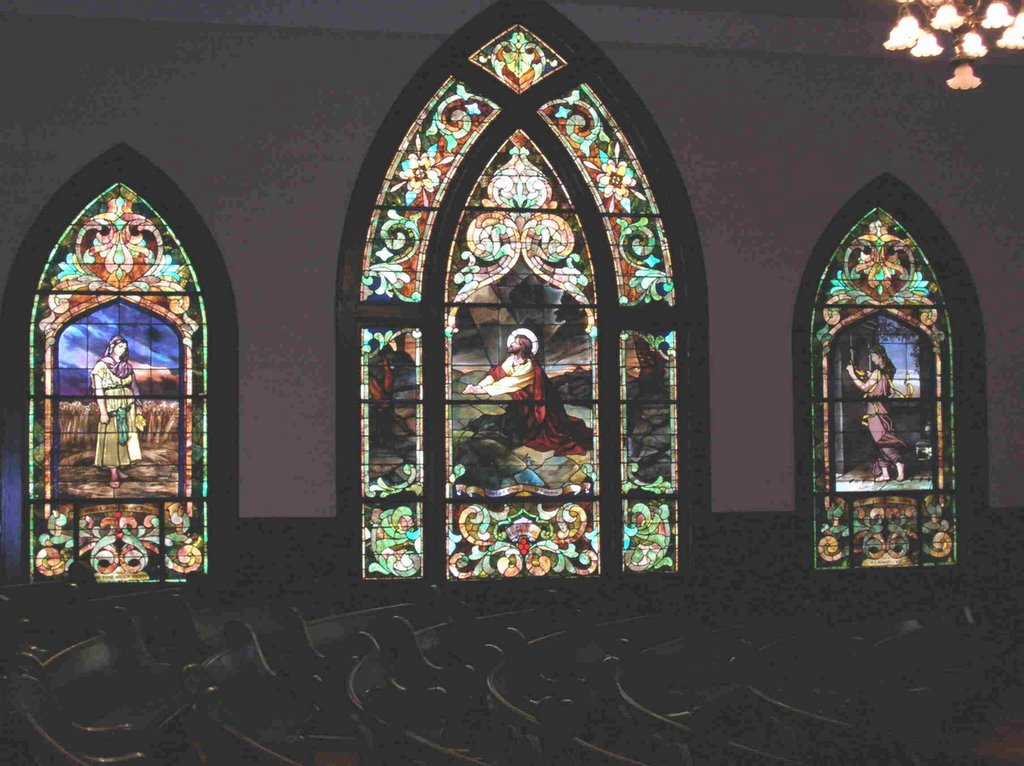
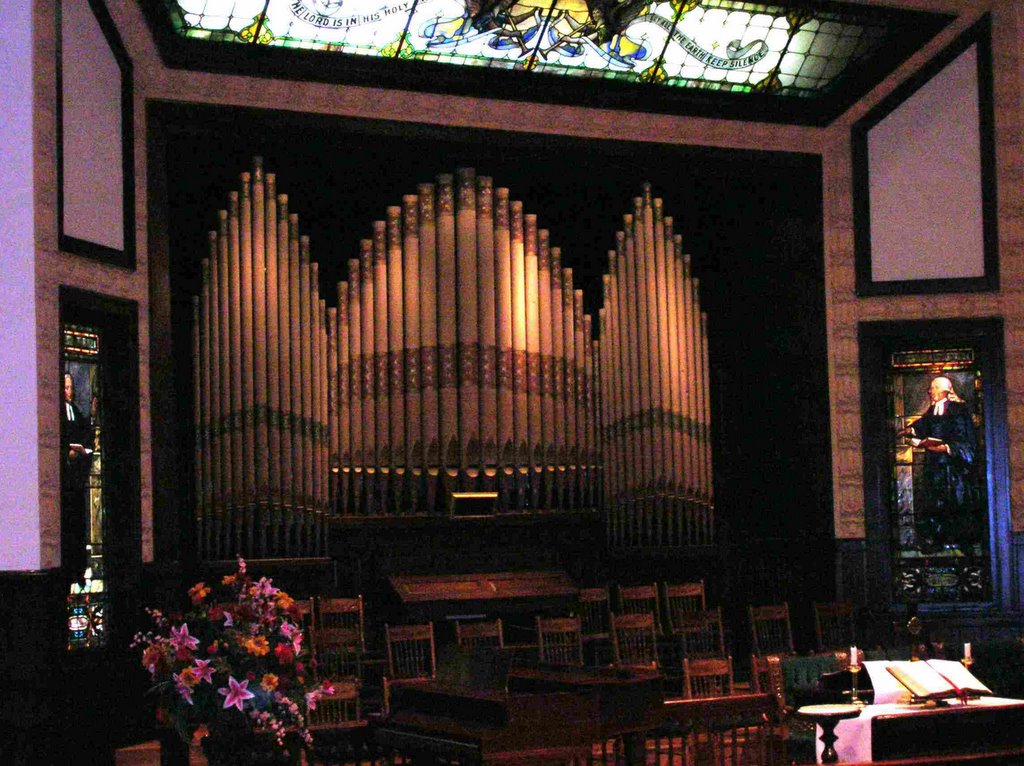
Our church sanctuary is a fine example of what I’d call permanent art. Constructed in 1904-1905, ours is the most beautiful sanctuary in town, and, I’m told, one of the most beautiful in NE Texas. I know it looks mighty nice. I also know that it costs heaps of money to maintain and will continue to do so from here on out. That’s the way old buildings are. Just before I arrived the church spent about $700k renovating the building. This past year we spend $49k on the stained glass windows and $34k on the roof. We’re just about done spending $185 rebuilding the pipe organ. The good news – it’s almost over. The bad? We still owe about $250k on the renovation loan and someday we’ll have to figure out how to stabilize the foundation. In the meantime, the expenses of our beauty most likely crimp our ability to expand ministry and meet other obligations.

But beauty is better than ugliness, right? Beauty honors God the Creator, right? I’ve heard this kind of protest against some of the newer churches that worship in plain looking buildings – or even in giant boxes. No beauty – just functionality. And after 25-50 years they just look dingy and are ready for replacement.

But are permanent (relatively) beauty and ugliness the only alternatives? I’d like to propose what I’ll call “temporary beauty.” We already do this to a certain extent. On the exterior, temporary beauty is called landscaping. It will include planting trees and flowers, arranging rocks and other inanimate objects in a way that is attractive. On the interior we occasionally make use of banners and wall hangings (not too many at our place – they’re not needed).

I see two big advantages to temporary beauty. First, being temporary, maintenance costs are lower. Second, and more importantly, more people can be involved. If we rely on the architecture alone for our beauty, it was done 100 years ago. We don’t need any more. But if – in addition to the architecture – we also have banners, wall coverings, paintings, sculptures and the like, these can be continually replenished by a vats number of people offering their gifts to the Lord.

I’m curious what others think. Leave me a comment and let me know.

Posted in Uncategorized | 1 Comment

Is “Gen-X” really rising?

Andrew Thompson has a bone to pick with the megachurches that cancelled services on Christmas Day this year. To be fair to Rev. Thompson, he is not alone. Much of the mainline media and many in the mainline denominations have really stressed over this phenomenon.

I admit I, too, was at first upset with said churches. I seem to have pretty much gotten over it.

Since we “gen-xers” cringe so quickly at the “We’ve never done it that way before” attitude portrayed by the established; I have been practicing catching myself with the same attitude. Isn’t hypocrisy fun?

Disdain for “megachurches” doing things differently seems to cut across generational boundaries. Here the lines are more fairly drawn at one’s connection with the established church.

Under the title of “Gen-X Rising” Rev. Thompson takes an establishment angle of attack on a decided non-traditional method of dealing with Christmas Day falling on a Sunday.

Is Gen-X really rising, or is it falling into the same habits and patterns of the generations gone before it?

Posted in Uncategorized | 1 Comment

Christmas Fire

We had some ice here a couple of weeks ago. Driving home in it, my windshield wipers froze to the glass. Feeling rather resourceful, I warmed a handtowel in the oven to melt the ice. Sadly, my resourcefulness did not include remembering to remove the towel from the oven.

We had just begun to open presents today when someone said, I think something is burning. I explained that I had just turned on the oven, and that was probably the smell.

When we saw smoke rising from the oven, we realized something else must be going on. I grabbed some tongs and removed the barely burning towel, and dropped it in the sink, and the crisis was averted.

Can someone lend me some nueron-connectors?

Posted in Uncategorized | Leave a comment

Christmas Blessings

I realize my last post (written between Christmas Eve services) wasn’t very Christmasy. So here we go.

Merry Christmas to you all! May you truly experience God’s gift of Jesus as a gift to you, receiving Him in his fullness – even if you don’t fully grasp what you’re getting yourself into.

Posted in Uncategorized | Leave a comment

Bobbitt (Market State) & Galston (Liberal Pluralist State)

Since I have a short attention span, I tend to read several books at the same time. I just finished William A. Galston’s Liberal Pluralism. The liberalism he defends is the classical liberalism that lies behind both the “conservative” and “liberal” political movements in the contemporary US. The key features of Galston’s liberal state are:
1. A recognition of a plurality of goods, many incommensurable with each other. In plain English, that means that Joe and Mary think each other nuts for counting as good what they count as good.
2. A move beyond modern reductive individualism. Thus the plurality of goods are not merely pursued by individuals, but by families and groups.
3. A development of Isaiah Berlin’s concept of negative liberty (freedom from restraint) combined with what Galston calls “expressive liberty,” the freedom to do what is most fulfilling (as defined by the individual or the group. The liberal state seeks to maximize its accommodation of the number of goods sought by its citizens, requiring a fairly minimal account of the common good.
4. One of the liberal state’s main jobs is to provide the space for individuals and groups to pursue their vision of the good. Necessarily there will be some restraint put on those pursuits, particularly keeping open what Galston calls the “possibility of exit.” While the state will allow groups (including families), to order their own lives, even in controversial and apparently unfree ways, there will be occasions when a person will want to leave that way of life. The group may not provide a way out, but the liberal state will.

As to providing space, Galston notes that the current situation of the US is for the sate to grow in so many areas that an increasing number of associations find themselves entangled in its operations, and hence less free.

That’s the gist of the first book in today’s post. Read the whole thing.

The second book is Philip Bobbitt’s Shield of Achilles. It’s a long, difficult book, so I’m just going to mention one point. Bobbitt traces the transitions in the nature of the State (in the West) since the 15th century. Since 1990, we’re seeing the transition from the Nation State (defined by its pursuit of the welfare of its citizens, thus also known as the Welfare State) to the Market State (defined by a goal of maximizing opportunities for its citizens).

If we bring Galston and Bobbitt together, we see that the Nation State (tended) to proclaim a set of goods – a maximal conception of the common good, while the Market State (which we do not yet fully have) recognizes a plurality of goods. Galston’s political vision, therefore, is a vision for the Market State, not the Nation State.

If were to ask which president best characterized the Market State ethos who comes to mind? Perhaps George W. Bush with his “ownership society?” Certainly. But it is also enlightening to consider that Galston worked on domestic policy for the Clinton administration – the very administration that pursued NAFTA and many societal reforms sometimes associated with Republicans. The evidence (admittedly my presentation is pretty scanty) indicates that Bobbitt’s “Market State” or the “Liberal State” as envisioned by Galston – is something beyond the mere Democrat – Republican divide.

Posted in Uncategorized | 1 Comment

Confidence Games

“Now don’t tell anyone. Keep it confidential.” In my business I hear that all the time. In many cases my gift of absentmindedness helps me keep things confidential. But there are other occasions – perhaps even the majority – where keeping information confidential is downright unhealthy.

As a pastor I sometimes hear – second or third hand – that something is going on in congregation. Group X is unhappy with Y, Joe & Mary Blow are fixing to have a divorce, the John & Suzy Doe are having financial problems, etc. But don’t say a word. We want to keep it confidential.

Now when it comes to youth ministry, this stuff is easier since youth are often more teachable than their elders. When a youth comes and offers to tell me something if I’ll “keep it confidential” the best response is, “I’ll use my wisdom to decide if I can keep it confidential or not.” In many cases, what they need is someone to stand beside them as they open up to their parents or someone else. Usually they need help and my just getting the information won’t do them any good. I need to connect them with a source of help. In such situations I never go behind their backs but always try to be up front about the healthfulness of opening up.

Of course, sharing information with parents isn’t always wise. In my years of ministry I’ve seen too many instances of an informed parent thinking the solution is to beat the child. In those cases keeping the information confidential is essential – but it’s still helpful to find places for them to be non-confidential.

So what about the adults who are suffering from confidence games?

The Bible says two things that directly apply to this. First, “Bear one another’s burdens.” If we’re to bear these burdens we must know what they are. Second, “Speak the truth in love.” It’s not easy to get to the place where we can dispense with confidence games. We’ve all been hurt by people blabbing about our sufferings in ways that were anything but loving. We need to build up love within the body so that we can have trusting relationships where it becomes safe to speak the truth.

Posted in Uncategorized | 1 Comment

Context

As I walked into my office this morning, I heard what sounded like opening chords of a Christmas carol. I didn’t remember having left music playing, so I quickly began to wonder where the music might be coming from.

It didn’t take me long to realize that what I had heard as chords was, in fact, a tune played by the brakes of a truck the next road over.

Though I laughed out loud at myself for the misunderstanding, I am rather glad I am enough in the Christmas spirit to have heard a carol in the brakes of a truck!

Posted in Uncategorized | Leave a comment

Watching our Words

Global warming, yea or nay? While politicians seem to argue about its reality more than any other group, we common folk have been known to joke about it. When we have exceptionally cold weather (like at one of Al Gore’s conferences a couple years ago) we point at it and say, “Hey look! More global warming!” Just recently I saw an article that global warming would cause the (north) polar ice caps to melt, which would release more fresh water into the Atlantic, which in turn would affect the Gulf Stream in such a way, that Europe would become much colder. Have you ever seen a study more ready-made for jokes: “Global warming leads to global cooling.”

Personally, I think it’s a language problem.

Instead of talking about “global warming” we should talk about “human induced climate change.” Although I must confess that I’m not a scientist and have taken no courses in meteorology, I do know enough to recognize our atmosphere (the place weather happens) as a complex system. A small tweak in one place can produce large (unpredictable) changes elsewhere in the system. That’s known as the “Butterfly Effect.”

If we change the discussion from “global warming” to “human induced climate change” then a much broader amount of data comes into the picture for us ordinary folks.

Posted in Uncategorized | 1 Comment

Christmas Sanity

One of the reasons I’ve heard offered by some of the mega-churches not having worship services is so the staff can have some family time. I understand the desire for family time. During my years of pastoring I have often wondered about our talk about Christmas as a time for family when I had to spend most of Christmas Eve working. (For that matter, I jokingly wish for more secular holidays celebrated at the end of the week rather than on Mondays. I’m jealous of those folks that get 3 day weekends.) I see a few things in tension here that may be worth looking at more closely.

First, Christianity is less about family than we tend to make it out to be. If Christianity was all about family, it would have never moved beyond the bounds of Judaism. The early Christian community – especially in the ministry of Paul – was all about going beyond bloodlines, ethnicity and culture.

Family was relativised even in the ministry of Jesus. One time when Jesus was teaching his family came to pick him up – and put him away. They thought he’d gone off the deep end. Jesus’ response? “Who is my mother, my brother and my sister? Whoever does the will of God.” Sure, there are the commands for husbands and wives to love each other, for children to obey their parents, etc. But the relationships with other believers appear to create new semi-familial structures in the early church.

Second, we too easily reduce “church” to what we do on Sunday morning. If “church,” from a biblical point of view, describes the people of God and their ongoing shared love relationship with God, then surely there are ways to do/be church other than what we traditionally do on Sunday mornings. Now if all we’re doing is sitting around our own living rooms celebrating materialism (even materialism “in Jesus’ name), I think we’re missing out. But if we join with other believers at Christmas, celebrate the birth of Jesus – and give Him gifts appropriate to his status as our Lord and Savior – that’s something different.

Third, the idea of taking Christmas Sunday off for family time hints at an important observation. As leaders we easily think that church is something we make happen. We not only aim to do the all important work of helping people get off the road to Hell and on to the road to Heaven, but we want to do all we do with “excellence.” (Just check how many church mission, vision and value statements mention that word – “excellence.”) I know by experience that “excellence” is tiring. It’s hard work. Too often it requires we sacrifice our families – and the people close to us – so the stranger can get our best. As I read scripture, however, I see a life better described as “sane” than “excellent.” Sanity is a way of talking about the health Jesus offers. Do you remember Acts 4:12? Those interested in arguing for soteriological exclusivism point to this text as claiming salvation is found only in Jesus. Certainly a biblical case can be made for that. But do we remember the context? Peter’s not talking to the San Hedrin about how people get saved: he’s talking about how people get healed. The point is this: We need to find saner ways to do church year-round, not just at Christmas (actually it’s even narrower – in the years Christmas falls on a Sunday).

Have yourselves a Merry, Sane, and Birthday of Jesus!

Posted in Uncategorized | Leave a comment