
The last couple of issues of the United Methodist Reporter have featured articles on GracePoint UMC, a recent church plant in Wichita, Kansas, that grew quickly, but let the denomination this spring. It’s depressing to invest so much money, energy and excitement only to lose the fruit. But it shouldn’t be surprising to people familiar with the way the UMC tends to operate. With few exceptions, we don’t know what to do with high energy innovate leaders. High energy leaders who excel at working within the system, yes, we have plenty of places for them. But people who push hard and are non-conformists? Our system pretty much pushes them elsewhere.
The Reporter spoke with Dan Dick, a UM leader (soon to be on staff at the Wisconsin Annual Conference):
He feels the denomination got off track in the 1990s “when we veered off and started pursuing the church-growth movement” so popular among nondenominational churches. He likens that model to a new business start: Select a location in a growth area, get a dynamic CEO-type leader and find “two or three very deep pockets to draw from, to be able to launch a really nice facility, good parking, good equipment and technology.”
While that formula may work in a congregational setting, he said, it’s not especially beneficial to a connectional system like the United Methodist Church, which seeks to create communities of faith that are accountable within a denominational structure.
Focusing on numerical growth and expansion isn’t really central to the Methodist identity, Dr. Dick argues. And while United Methodist churches want to reach as many people as possible, the Wesleyan focus is instead on building communities that equip people to live as Christian disciples.
“That’s a very different thing,” Dr. Dick said. “It’s one of the reasons why we are traditionally and still are fundamentally a small-membership denomination.”
Most successful United Methodist church starts, he said, tend to have three things in common: They are a satellite of an existing congregation, they have a committed core group of leaders and they are designed to meet a specific need, such as a different racial or ethnic demographic.
GracePoint was a fairly good model, but its expansion was “poorly executed,” Dr. Dick said. Though the church plant sought to launch satellite campuses to reach different audiences, he said “they operated congregationally in a vacuum” and weren’t as concerned about where other United Methodist congregations were present. “They were going into a head-to-head competition rather than seeking ways to be collaborative and connectional.”
I read this and hear that (1) we need to keep our churches mono-cultural and (2) work hard to make sure everyone is happy. If Dr. Dick’s theory is correct that would explain why our denominational membership and evangelistic efforts boomed through the 1970s and 1980s, only to crater in the 1990s when we started to pay attention to the Church Growth Movement. But if that’s the case, why have we had so many books and articles before the 1990s decrying our lack of evangelism and our failure to reach people and grow churches?
I am in a position of no authority in the denomination. I pastor a small church in a small town. I am not charismatic in any sense of the word. My gifts are more in teaching and academia than in growing organizations. But I do know a few things.
1. We need to repent of our compulsion to keep people happy. In our local churches we work so hard to keep the long time members happy that we’re unwilling to make changes that might reach new people – even if those “new people”are our own children and grand children.
2. We need to be more concerned about people becoming followers of Jesus than we are concerned about them becoming OUR followers of Jesus.
3. We need to not only say we want young people in our churches, but we need to stop making them act like retired folks before we allow them to have a say in what we do.
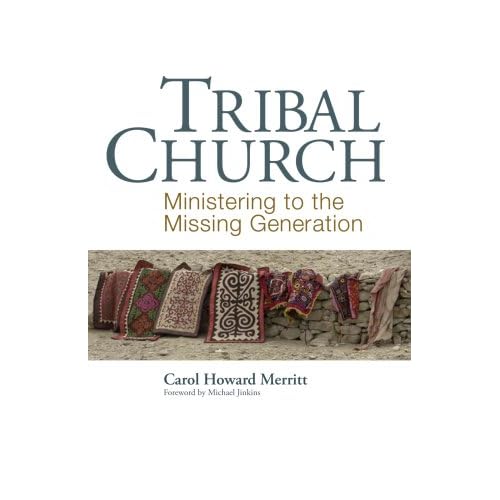 I just finished reading
