Lots in his post, so check it out. Just a couple comments.
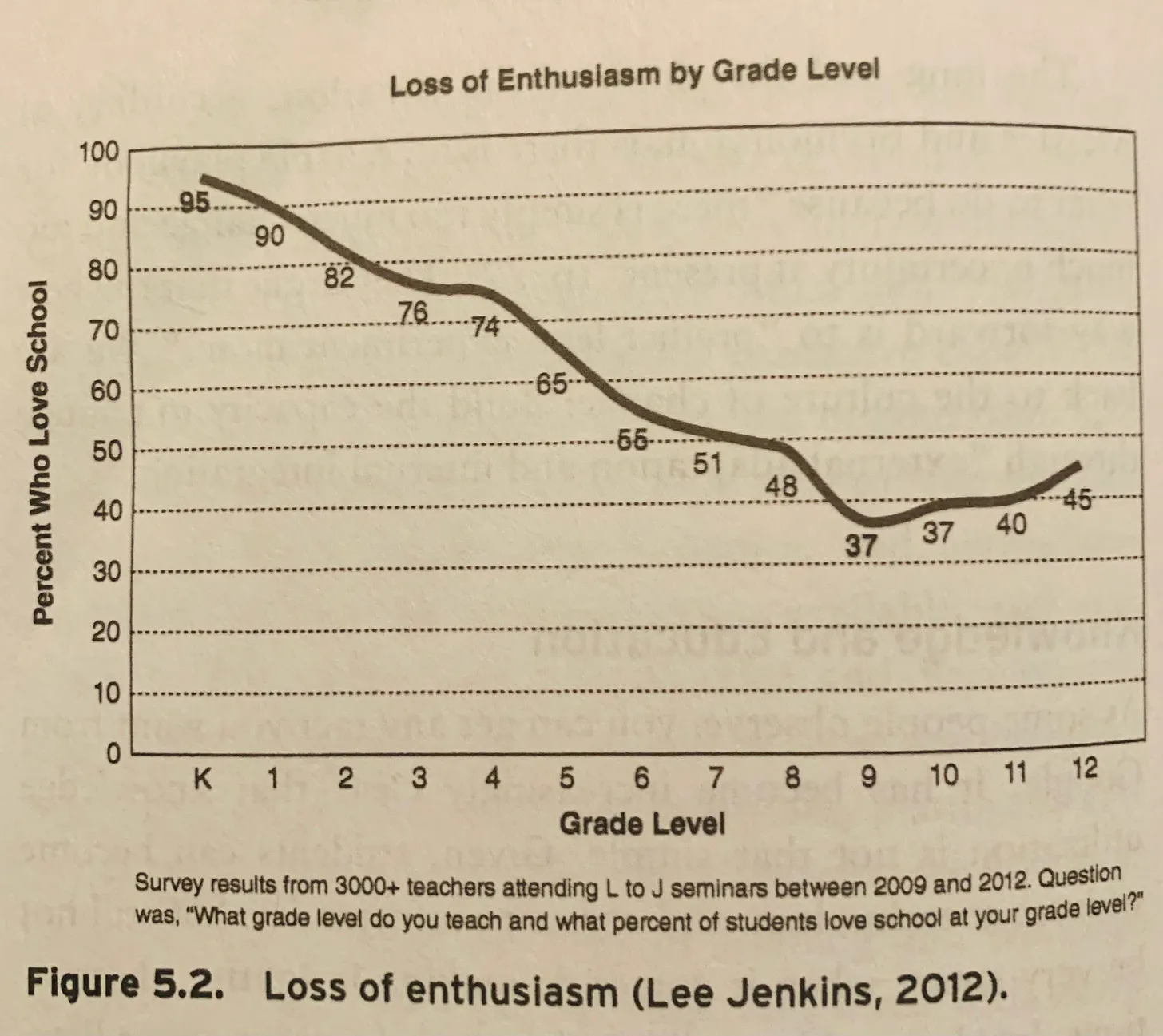
Enthusiasm isn’t the goal of schooling – but we (and the kids) shouldn’t have to fake it.
My favorite years of my K12 schooling was fourth grade and the first half of fifth grade. We lived on base in another country and attended a small DOD school. My classroom had grades 4-7 all together, as I recall. Miss Virginia Watson was our teacher.
Is there a way to change this enthusiasm – can we settle for “interest?” – curve?
Several political scientists are noting that our new regime here in the US is an example of what Max Weber called “Patrimonialism.” I first saw this in Jonathan Rauch’s piece in The Atlantic the other day.
In a key section Rauch says,
Patrimonialism is less a form of government than a style of governing. It is not defined by institutions or rules; rather, it can infect all forms of government by replacing impersonal, formal lines of authority with personalized, informal ones. Based on individual loyalty and connections, and on rewarding friends and punishing enemies (real or perceived), it can be found not just in states but also among tribes, street gangs, and criminal organizations.
In its governmental guise, patrimonialism is distinguished by running the state as if it were the leader’s personal property or family business. It can be found in many countries, but its main contemporary exponent—at least until January 20, 2025—has been Vladimir Putin. In the first portion of his rule, he ran the Russian state as a personal racket. State bureaucracies and private companies continued to operate, but the real governing principle was Stay on Vladimir Vladimirovich’s good side … or else.
Fukuyama describes the problem of patrimonialism as we’re experiencing it:
One of the big themes of my two Political Order volumes was the great difficulty of creating an impersonal modern state, in which your status depended on citizenship and not on your personal relationship with the ruler. A modern economy is only possible under these circumstances as well, as the state undertakes to protect property rights and adjudicates transactions without regard to the identity of the rights-holder.
Do we want to live in an “impersonal modern state?” Do we want our status and our fortunes to rely on our relationship to one man? I for one would rather be a citizen than a subject.
Finally, Hansen and Kopstein, the political scientists Rauch’s article works from, also have a piece in Persuasion. Their focus is on how the shift back to patrimonialism is revolutionary.
Here’s their discussion on how we should take the rhetoric of the patrimonialist leader:
There are certain rules of the game in patrimonial politics. Hanging on every word of the leader is one of them. Unfortunately, then, we need to follow Trump’s communications in their entirety in order to understand where he is taking the country.
In a leader-centered political order, whatever the boss says, no matter how outlandish, sets the agenda for every underling. In fact, the willingness of subordinates to parrot and defend even the most extreme parts of his stated agenda is one of the most important signs of regime loyalty, used by the leader to decide on promotions, demotions, and in cases of open criticism, retribution. Those opposed to President Trump cannot decide, say, to ignore his social media posts about making Canada the 51st state, nor can they claim that his tariff threats are just a “bargaining chip” while focusing on his efforts to subordinate the federal bureaucracy to his will. All of these stated priorities matter, precisely because the essence of patrimonialism is the leader’s arbitrary right to treat the state as his personal property.
Once upon a time I would have been surprised that so many were willing to submit to this kind of leadership. Of course, James Madison expected members of congress to zealously guard the powers associated with their office, and how does such an expectation fare in our age?
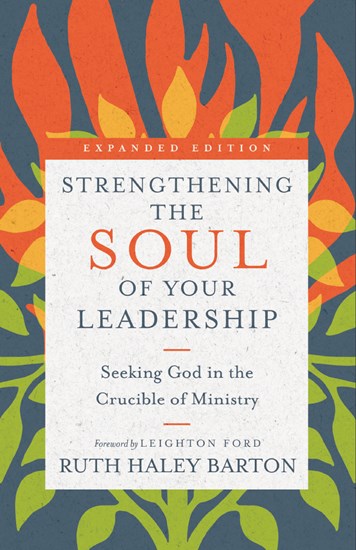
I just saw that her Strengthening the Soul of Your Leadership (kindle version) is on sale. I first read this about five years ago and it was just what I needed at the time. If your soul feels weary, if you’re facing headwinds and discouragement, check it out. I bet you’ll be blessed.
If “church growth” means that a church is seeing people (a) come to faith in Christ and (b) grow in faithfulness to Christ, then “church growth” is a good thing.
Notice that church growth defined in these terms is not just a matter of increasing numbers. I’ve seen periods of increasing numbers in most churches I’ve served. Most of our increase in membership at these churches has been from “shuffling sheep,” from attracting Christians from other churches (whether near or far). Merely having increasing numbers can be good for morale. It can be a factor in producing the kind of church growth I mentioned in the first paragraph. It can also become an end in itself, puff our egos, or encourage idolatry.
Church growth defined in the terms of the first paragraph is also not a matter of increasing business or activity. To some degree getting more people to do church stuff or getting people to do more church stuff can be a factor in real church growth. Often, however, it’s just busyness in the name of Jesus.
In my own context I keep going back to Zechariah: “‘Not by might, not by power, but by my Spirit,’ says the LORD.”
Carey Nieuwhof has a short talk (without too much advertising) about valuing engagement over mere attendance. I’m not sold on his big push for “productivity,” but I do think he’s right on valuing engagement. I seek engagement because it is more likely to help people come to faith in Christ and to grow in faithfulness to him. Getting them to just be on site, just to sit and listen, just to be busy – I don’t see that producing what we’re looking for. Face to face, person to person, life to life engagement – that can make a difference.
When we talk about how revival might happen, we commonly turn to 2 Chronicles 7:14 – “If my people who are called by my name will humble themselves and pray, and seek my face, and turn from their wicked ways, then I will hear from heaven, will forgive their sin, and will heal their land.” We read that but we don’t DO that.
We look for ways to humble other people, the evil people we see plaguing the land.
We’re absolutely sure OUR ways aren’t wicked – after all, have you seen what THOSE PEOPLE DO?
We assert our own righteousness and look for ways to enforce it on others.
There will be no revival, no activation of what we see in 2 Chronicles 7:14 until those who are God’s people do what it says.
To that end, we start by asking God to convict us, to show us our sin and our need for repentance.
Then we take the next step of actually repenting, of turning from our sin and to Jesus.
Repentance is hard – we like our sin – we’re comfortable with it. But it’s killing us.
Alan Jacobs opines on Ross Douthat’s new book and its assumption that Christianity is a religion. I have not yet read Douthat’s book (only listened to Tyler Cowen’s Conversation about it). Having long questioned the usefulness of thinking of Christianity as a religion, I resonate with what Jacobs writes.
I had my measles vaccine back when I was a kid. In recent years getting the vaccine has become more contentious. People are afraid, some even thinking the vaccine is worse than the disease. Here’s a graphic from the New York Times showing the relative risks:
We’ll see if increases measles outbreaks leads to more uptake of the vaccine.












 Bandits No More