Incomprehensible Incompatibilities

The Book of Discipline of the United Methodist Church uses “incompatibility” language in 2016-book-of-discipline-582x388two areas. Both of these areas are incomprehensible to large swathes of the church membership.
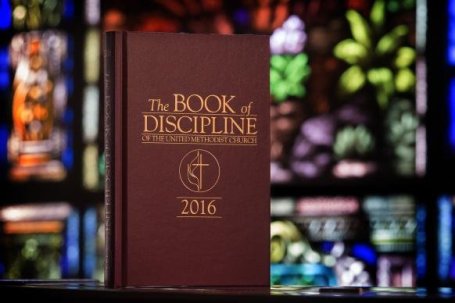
In the best known passage, the BOD declares “the practice of homosexuality” to be “incompatible with Christian teaching.” Less well known is the other declaration of “incompatibility” in our Social Principles. We find there also, “We believe war is incompatible with the teachings and example of Christ.”

In the early 20th century Rudolf Bultmann famously claimed that in our scientific world of electric lights we cannot believe in miracles and resurrections. Events that cannot be explained within the bounds of science are incomprehensible to us. True respect for scripture means we have to find other ways to read that scripture to make sense of it so it is the word of God for us. He called this “demythologizing.”

Science and scientism don’t play the same role in our culture as they did a hundred years ago. Now we find them speaking most clearly in the realm of ethics. When we look at the world we find that it is descriptively true that the “practice of heterosexuality” is not for everyone. Some people, as far as we can tell through no choice of their own, are attracted (oriented) toward their own sex. Some men are sexually attracted to men, some women are sexually attracted to women. If this is descriptively true of the way people are, it is incomprehensible that acting on these attractions could be wrong. And yet the Bible and the UM BOD appear to say that acting on these attractions is wrong.

We can find ways around the Bible. We can say that the “homosexuality” it talks about is not the same phenomenon as the “homosexuality” we’re talking about. We can be faithful to scripture and set aside the incomprehensible teaching of scripture.

Getting around the BOD is harder. The statements in the BOD are formulated as interpretations and applications of scripture addressed to our current context. As a legal document the BOD aims to be as specific as possible and to eliminate loopholes and avenues of contrary reasoning.

A significant portion of the United Methodist Church membership in America finds the current position regarding this aspect of sexual ethics utterly incomprehensible. This portion is not evenly weighted throughout the church, however. Greater percentages of the episcopacy and top leaders of the denomination and its institutions find our official teaching on homosexuality to be incomprehensible than do those who do not have positions of power. Also, clergy are more likely to find our position incomprehensible than are laity. It is largely this differential that has led to the reality that our official position has rarely been taught, defended, or developed in many of our churches. It is not surprising that a position that is rarely taught, defended, or developed becomes incomprehensible, especially when the culture as a whole is moving in the opposite direction.

Our declared position on war is equally incomprehensible, though to different people. I haven’t seen surveys of our UM population in America, but I would guess that the variance among those who hold and those who reject our position on the incompatibility of war with Christian teaching is close to being opposite to that of our position on homosexuality. In other words, laity are more likely to find our position incomprehensible than those who inhabit the upper reaches of the church hierarchy.

If we look at Jesus, our position on war seems entirely comprehensible. Jesus talks about “turning the other cheek.” More than that, when Jesus is threatened, arrested, attacked, and even killed, he does nothing to defend himself. Jesus in the Gospels is clearly depicted as a practitioner of nonviolence.

What about Jesus’ followers? How did Paul, for example, handle the dangers that his churches faced from their enemies? Did he say something like, “Make sure your security teams are well-armed, so that if any violent evil people come into your midst and try to kill or injure people, you will be ready to ‘put them down’?” That makes sense to us. We look at recent church shootings, for example. A man with a gun wants to kill people. An armed and prepared defender of the defenseless steps up and with a single shot saves the congregation. It makes perfect sense, this instance of using power to defend the weak. It’s incomprehensible that this could be wrong.

Unlike the issue of homosexuality, the BOD gives us more maneuvering room on this issue. Rejecting war as “incompatible with the teaching and example of Christ” is not the same as rejecting “self defense” or “defense of the weak” as incompatible with Christian teaching.

From what I see, we look at war – at least our wars – as justifiable extensions of the same principles we use when arming “guardians” in our churches. Killing Iranian General Suliemani, for example, is justifiable because he was an evil man bent on killing many innocent people. Bad war, non-Jesus-style war, would be wars like he perpetrated; or wars like Russia engages in with Ukraine.

Scripture also gives us more of an out when it comes to justifying war. All we have to do is look at God’s chosen people, Israel, in the Old Testament. Their wars were not only justifiable, but were also commanded by God. If God can desire his people to go to war in times of threat in the Old Testament, surely it must be justifiable for his people to go to war now when we’re threatened. It’s incomprehensible that our nation not be allowed to defend itself!

There is an obvious asymmetry of action in these two areas. When we teach that “the practice of homosexuality is incompatible with Christian teaching” we are talking about the church and putting limits on what the church does and doesn’t do. When we teach that “War is incompatible with the teachings and example of Christ,” we are putting limits on what another entity, the state, does and doesn’t do. We have no control over the state (though we imagine we have influence). We do have control over the church – well, I take that back. We don’t have control over the church. In its work of legislating the General Conference imagines it has control over the church, but when most of the executive authority of the church finds its teaching incomprehensible (and even immoral), then there is a failure of control.

What are we to make of these two incomprehensible incompatibilities? The obvious solution is to divide so that each segment of the church can be fully aligned with what it finds comprehensible. Looking around the United Methodist Church recently it seems more and more have finally reached this conclusion. It’s time to stop fighting and go our separate ways. I understand that. I feel the relief division offers. (That’s not all I feel. With many others, even many of those working hardest for division, there is also extreme discomfort, unease, pain, and a sense that we’re failing Jesus’ prayer in John 17.)

As we pursue division so that we can be more pure in our alignment with what we think is right, I’m concerned that will find ourselves even more in a place where we are more formed by our culture than by our discipleship to Jesus. Our culture is not monolithic, so it’s easy for us to have factions fighting with each other and yet each in thrall to some division in our culture. Once we divide it’ll be easy for some to just follow the culture in the area of sexuality. Division will also make it easier for some to just follow the culture in the area of war and the use of force. As we’ve done before (I think of 1844), the fact that our divisions mirrors the culture’s divisions, makes it more difficult to speak to that culture and not just echo it with a veneer of religiosity put on top. I don’t see a way around division. But I am praying, and God’s smarter than I am.
Posted in Current events, Discipleship, Ecclesiology, Sexuality, United Methodism, War | Tagged , , , | Leave a comment

Powell & Argue – Growing With

Note: A free copy of this book was sent to me by Baker Book Bloggers for purposes of GrowingWithBookreview.

Growing With: Every Parent’s Guide to Helping Teenagers and Young Adults Thrive in Their Faith, Family, and Future is a helpful book for Christian parents. Based on their research, both teach at Fuller Seminary in the area of youth ministry, and their experience as parents, they write to help families be healthy together.

Powell and Argue introduce what they call “Growing With parenting,” which they define as “a mutual journey of intentional growth for both ourselves and our children that trusts God to transform us all.” To this end, they create some new words to talk about distinct areas of parenting. “Withing” refers to “a family’s growth  in supporting each other as children grow more independent.” “Faithing” refers to parents and children intentionally engaging with and developing their relationship with God together. Their third term, “adulting,” is in more common use and refers to equipping children to make the transition from dependence not only to independence, but also to interdependence. In their chapters they deal with each of these three elements in relation to three stages of maturation. They call these stages “learner” (childhood), “explorer” (teenagers), and “focuser” (young adults), showing how each stage differs and builds upon what has gone before.

One thing I appreciated about the book was that they mentioned the presence of disabled children at a couple of places. Our own oldest child is disabled, now an adult still living in our home and dependent on our care. Most books on parenting that I’ve read in the past don’t even acknowledge the presence of disabled children. Furthermore, their research led them to recognize differences among racial and ethnic parenting and family styles (very broadly conceived). In both these cases the book mostly just points at these differences and doesn’t develop material to help parents who are not middle class white people with “normal” children.

This book would be of primary value to parents dedicated to raising Christian children and open to a non-authoritarian style. Powell and Argue assume that parents have as much learning and adapting to do as children, so parents who are convinced they know all they need to know and are committed to acting as if the parent is always right will be frustrated by their advice. Style-wise, the book would work well for a parent’s class or discussion group.


Posted in Books, Parenting, Uncategorized | Tagged , , , , | Leave a comment

Worship and Culture

Robert Jenson wrote:

“If you can teach previously clueless inquirers to participate in some ‘service of worship’ in a week or two, the service is merely thereby unmasked as dubiously Christian. The baptized face a new culture of the church like a mountain in front of them, which they will be climbing till they die. Where the convert does not face such a challenge, one must ask if it is the church he is entering.”

I don’t remember the context of this quotation. I can say two things about it. First, it can easily be used as a polemical cudgel in worship wars. Second, there’s an important truth here.

The important truth is the easiest thing to observe. What we may variously call “Christianity” or “the Christian faith” is more than just a set of easily acquired bits of mental furniture. Being a Christian does entail having certain beliefs, i.e., believing that certain claims are the case. Having these beliefs is part of being a Christian. Having these beliefs is very far from being the whole of being a Christian. James tells us that “the devils believe – and tremble.” Demonized individuals confronted Jesus when he was out and about. They tended to know who he was – even when the others around did not. Their knowing who he was – their having that bit of mental furniture – changed their lives not a bit, and did them no good.

A too often neglected part of becoming a Christian is being enculturated into the Kingdom and its ways. If there is no difference between the person’s original culture and the culture of the church he or she enters, then there’s something seriously wrong. Becoming a Christian includes adopting a new culture. becoming a functioning citizen of the Kingdom. Jenson recognizes that this enculturation into the church is a big thing – a “mountain in front of them.” The mountain cannot be scaled in a few weeks – even a few years. Enculturation into the church and the kingdom it represents is a whole-life phenomenon and a life-long adventure.

Services of worship, Jenson asserts, are events that find their home in Christian culture. The assumptions and actions implicit in Christian worship make sense in Christian culture. They will in important ways be alien to the host culture of the Christians worshiping there.

But how alien? This is where the cudgel comes in. Will we have to ruthlessly critique any worship that aims at intelligibility for outsiders or newcomers? Will having Latin again be the language of worship be sufficiently alien? Learning Latin well enough to participate well in worship will take a while. Well, at least for us. But in at least some of early western Christianity, Latin was the language of the people. Worship in Latin was not alien.

True Christian training for worship requires focused awareness on the shift from one’s host culture to Christian culture. This is easier said then done, since Christian culture is always and only found enmeshed in various host cultures. Andrew Walls’ Pilgrim and Indigenizing principles get at this. The Pilgrim Principle teaches that we are always pilgrims, always in transition, always seeking to move toward greater alignment with Christ and his kingdom. The Indigenizing Principle teaches that we are always become more at home in our host culture, bringing the message of Christ to the culture and its inhabitants. If outsiders are to understand enough to become insiders – or even to be offended by and coherently oppose the Christian movement – they will need some common ground to do so. This common ground is always partial and inadequate, but there’s no way around it. Our challenge, illustrated by two millennia of Christian history, is to collapse neither into the purity and otherness of the Pilgrim Principle alone nor into the identification and ease of the Indigenizing Principle alone.

Posted in Culture, Ecclesiology, Missions, Worship | Tagged , , , , | Leave a comment

What Kind of Thing is Christianity?

I’m about to finish a sermon series on Christianity and other religions. It was a difficult series for a few reasons.

First, it was difficult because I’m not sure the category of religion is all that helpful  – or as clear as we usually assume.

Second, as one with advanced academic training, I know what specialization is – and that when it comes to other religions, I don’t have it.

Third, just the few religions we looked at – Islam, Hinduism, and Buddhism – are hugely complex, diverse phenomena. Devoting a mere twenty minute sermon to each is barely scratching the surface of that complexity and diversity.

Fourth, I feared that for some the preaching – that was also teaching – would function only as teaching, that is, as a long list of (maybe) interesting facts. Teaching is good, and we Christians need more of it. What preaching adds to preaching is a clear call to the will to do something with that which is taught.

One of the things that keeps coming back to me when I talk about this subject is “What kind of thing is Christianity?’ I worry sometimes that series like the one I’ve just finished encourage people to simply categorize it as a “religion.” Religions, we all (think we) know, are primarily belief systems. So IF Christianity is a religion, it is best understood as a belief system.

There’s certainly something right about that. The act of believing – and believing particular things – is important in Christianity. Without the particular things we believe, that there is one God whom we know in three persons, Father, Son, and Spirit, that Jesus is the Son of God become human, that this Jesus took our sin and brokenness upon himself, dying on the cross, and rising on the third day to name just a few, there is no Christianity.

But if we think Christianity is only or even primarily a list of true things we believe, we’re not only missing the most important aspects, but we’re also failing to understand faith.

I can believe Jesus is the Son of God and that Sams is a major attraction in Fairfield all on my own. I need never have interaction with Jesus or go to Sams to believe these things. Believing that is important, but it’s a bare starting point. It breaks my heart that so many get no farther.

Real Christianity is a whole life phenomenon. Faith, in addition to the elements of believing that, also includes trusting, obeying, perceiving, and giving allegiance to. I can go to a baseball game, cheer for my team, and afterward proclaim, “We won!” But WE didn’t win. I watched, I didn’t play. Christianity is similar to baseball, in that it is something we inescapably do with other people. I can believe there is such a thing as baseball and even know a great deal about it without ever playing it. I can even don a jersey and go to every game. But baseball is in the playing. Likewise, Christianity is in the playing.  There’s no way around it.

What’s your next step as you “get in the game,” as you “join God in what he’s doing?” What’s your next step as you move toward whole life engagement with Jesus in the company of your fellow disciples?

Posted in Christianity, Consumerism, Discipleship, United Methodism | Tagged , | Leave a comment

Tremper Longman – Confronting Old Testament Controversies

Note: A free copy of this book was sent to me by Baker Book Bloggers for purposes of review.

It doesn’t take more than a few minutes with the Old Testament to discover that it comesconfronting ot controversies from a cultural perspective vastly different from our own. This recent book from Tremper Longman addresses major controversies that have come to the fore in the past couple of centuries.
The four controversies Longman deals with are Evolution, Sexuality, History, and Violence. If one reads the first chapters of Genesis as equivalent to a scientific description of the origins of the cosmos and humans, the theory of evolution – and much of the rest of modern science – conflict is the natural result. When it comes to sexuality, the plain reading of the Old Testament looks not only like marriage is only a man/woman institution and that all non-heterosexual expressions of sexuality are out of bounds, but also like patriarchy is the divine intention for humanity. When we read the stories of conquest – and later some of the warfare scenes of the kingdom era – we see what looks like a genocidal, bloodthirsty god, commanding his people to wipe out all non-Israelites. These three controversies are plain to lay people. The controversy regarding history may be more limited to scholars. This controversy is over the historicity of the stories in the Old Testament – did any of the events depicted there even happen?

Longman writes from the perspective of evangelical biblical scholarship. He has a high view of scripture as inspired and inerrant. If you want a book that deals with these issues and gives you all the “right answers,” this is not the book for you. Longman’s approach, instead, is to examine scholars who have written on the central controversies as they stand today. He considers their arguments in light of what the text says, the cultural background, and how they measure up against others writing in the field. You won’t come away from this book with the tensions between the biblical text and our current cultural and academic values dissolved. You will come away, however, more informed of the options for dealing with these issues.

Posted in Bible, Books, Culture, Evangelicalism, Evolution, Old Testament, War | Tagged , | Leave a comment

Not So Much Unity

Lovett Weems sees more unity than I do when he writes,

What if the General Conference addressed matters of doctrine, mission, and values and gave freedom (such as Central Conferences already have today) in structure and regulations, including clergy standards? Thus, General Conference becomes a time for celebration, worship, and engagement with those elements of United Methodist identity that unite across all boundaries and differences.

We might use the same words in our talk about doctrine, if we consider the Articles of Religion, for example, as expressing “our doctrine.” There are many who still think in terms of the pre-1988 Disciplinary statement on doctrine. Up until 1988 the BOD supported normative doctrinal pluralism; the 1988 BOD turned away from that position.

If we actually had the level of unity he imagines, then it might be possible to “move from structures of control to a culture of trust and grace.” As we stand now, we don’t have that. From what I see, the UMC has never had that level of unity. I pray that in our ecclesial re-alignment we find ways to have that kind of unity in more than just our denominational name.


Posted in Current events, Diversity, Doctrine, Ecclesiology, United Methodism | Tagged , , | Leave a comment

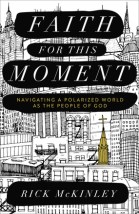
Review: Faith for this Moment

If you have access to this review, you know we live in a highly polarized culture. One the one hand, our political polarization has been on display during the past week as a miscreant from Florida sent mail bombs to leading Democrats, as an evil doer from Kentucky decided to go kill black people for no reason other than their race, and as a murderous thug killed almost a dozen Jews in Pittsburgh. We didn’t even have time to mourn before the tribal recriminations began.

Our churches are not only in this polarized culture, but are in many ways of it. My own United Methodist Church is in the final throes of a battle that’s been raging pretty much since the denomination began in 1968. The denomination’s official position on issues in the bounds of sexuality are mostly in line with traditional Christian positions, and thus at increasing odds with broader American culture. As American United Methodists, we have, as always, taken up positions defined and defended in our culture as not just American, but also as Christian.

FaithForThisMomentRick McKinley, in his recent book, Faith for this Moment: Navigating a Polarized World as People of God takes these cultural issues head on. McKinley frames the Christian approach to this conflict in terms of the Old Testament experience of Exile. The nation of Israel was God’s chosen people. They had experienced awesome moments of God’s blessing. But then in the 6th century BC, they were defeated by the Babylonians and carried off into captivity. In the prophetic literature, Israel is challenged to respond to their Exile in a way that maintains their faith in God and their calling to be his people.

McKinley, a pastor in Portland, Oregon, has experienced the marginalization of the church first hand. Portland is on the leading edge of secularization in America, so how could he plant and grow a church there, where the culture seemed as such deep odds with traditional (American) Christian culture?

Faced with what to do with its host culture – while in “exile” – McKinley sees three common responses. When we are confronted with culture we either baptize it, accepting it as indistinguishable from our faith, burn it, see if it as entirely in conflict with our faith and thus worthy of total warfare, or bless it, recognizing its people are our neighbors. Settling on Jeremiah 29 as a primary text, McKinley opts for the “bless” it option.

The greatest weakness of the book is the failure to confront the specifically Christian contribution to current American culture. For most of our history, Christians have been in charge. It’s not that some foreign culture has invaded and imposed its values on us. What we have is evolution within a formerly Christian-molded culture. And that Christian-molded culture was profoundly broken in multiple ways. We need look no farther than the Christian voices that built and defended slavery and the oppression of African Americans even after slavery. The hypocrisy of Christian culture is a large part of what got us where we are.

The greatest strength of the book comes in the last chapters where McKinley discusses “practices” that enable the people of God to “bless” their host culture. The chapter on Generosity is particularly good.


Note: I received a free copy of this book from the publisher for the purpose of writing this review.

Posted in Books, Clash of Civilizations, Culture, Discipleship, Ecclesiology, Leadership | Leave a comment

Review: 50 Core Truths of the Christian Faith

Gregg R. Allison’s 50 Core Truths of the Christian Faith is a helpful survey of basic 9780801019128Christian theological teachings. Though Allison is a professor at a Southern Baptist seminary, he writes for a broad evangelical audience.

The first thing I like about the book is it’s structure. Each chapter deals with a single doctrine and is divided up into multiple sections:

  • Summary
  • Main Themes
  • Key Scripture
  • Understanding the Doctrine (further subdivided into Major Affirmations, Biblical Support, and Major Errors)
  • Enacting the Doctrine
  • Teaching the Doctrine
  • Perennial Questions and Problematic Issues
  • Teaching Outline
  • Resources (a bibliography)

This structure makes it very easy for non-experts to grasp the material and use it in teaching sessions.

A second thing I like is Allison’s labor to speak to an audience broader than his own baptist tradition. This has the dual blessing of making the book useful in multiple churches and of including multiple viewpoints. As a Wesleyan, it’s been common in my experience for evangelical writers to present adherence to Calvinism as necessary to being an evangelical, therefore leaving all Wesleyans on the sidelines. Allison is clearly more Reformed than Arminian, but he is fairly generous.

If you’re not a conservative evangelical, this book is probably not for you. Though Allison allows for some breadth of teaching, the limits are not really very broad. One way to see this is the assumption of a foundationalist epistemology, exemplified by the building of doctrine an inerrant scripture.

I also appreciate Allison’s inclusion of a section on “Enacting the Doctrine.” For too long Christians have acted like doctrine is only something to be believed – a sort of “mental furniture.” Allison is correct that doctrine has consequences for the way we live as Christians and as the people of God.

One of the limitations of this book comes from covering 50 doctrines in a single volume. Not only would one wish some doctrines received greater coverage, but important dimensions of theological teaching are left unconsidered altogether. There is little or no attention, for example, given to scientific and philosophical consideration. Allison might argue that these disciplines have no place in a truly scriptural theology, but by not considering them (except as contributing to theological errors), the theologian becomes blind to ways culture and other schools of thought have crept into our ways of thinking.

[Note: I received a copy of this book from Baker Book Bloggers on condition of writing a review.]

Posted in Books, Theology | Tagged , | Leave a comment

The “Angry, Offended” God

I ran across this quotation on Twitter the other day:

“God, apart from Christ, is an angry, offended Sovereign. Unless we behold God in and through Christ, the only Mediator–the terrors of His Majesty would overwhelm us. Because of our sins–we dare not approach the Father, except in Christ.”

The quote comes from Stephen Charnock, a 17th century English Puritan. As a Wesleyan Christian, this is, in important ways, alien from the theological picture I work from.

Here’s where I can agree with Charnock:

  1. God is sovereign. God is the sole creator of all that is. God is the ultimate authority not just in theory, but in fact. We ought to submit to God in all areas of our lives. God alone is due (and worthy of) our worship and devotion.
  2. Jesus Christ is the only way to God. Other so-called gods are no help to us. Our performance, how ever great we or others judge it, gets us nowhere with God. God is never in our debt; we are always in debt to God. Jesus is the only mediator between us and God.
  3. There is a huge gap between us and God. Morally, we fall short of God’s ideal. From a practical point of view, this is because of our sin. Our sin distorts our perception of God as well as of everything else. We lack accurate understanding of an insight into ourselves because of our sin.
  4. God is not safe. Not only is God “a consuming fire,” but the consistent biblical picture of people who come face to face with God (whatever that means, given our vast ontological difference), are completely overwhelmed. We are never God’s “buddies.”

My great difference with Charnock comes in the first line: “God, apart from Christ, is an angry, offended Sovereign.”

  1. Where at least some strands of the Calvinist tradition (as represented in Charnock) view God as primarily “holy wrath,” the Wesleyan tradition views God as primarily “holy love.” Calvinists do not deny God’s love, and Wesleyans (at least when they’re true to Wesley) don’t deny God’s wrath.
  2. Given my experience of United Methodism, the largest denomination in the Wesleyan tradition, I need to say more about God’s wrath. I’ve noticed that many of my contemporary Methodists (who I assume would count themselves as Wesleyans also), don’t like talking about God’s wrath, deferring to the attribute of love alone. The first step in joining the Methodist movement in the 18th century was evidencing a “desire to flee the wrath to come.” This was not the wrath of the French, the Germans, or the Turks: this was the wrath of God. In my experience we never use this Wesleyan phrase any more.
  3. The Trinity – Father, Son, Holy Spirit – is eternal. We misunderstand the Trinity when we imagine some eternal GOD, who only later, after the fall, “splits up” or “becomes” Trinitarian. There is thus no such thing as “God, apart from Christ.” The Trinity is always, from all eternity and into all eternity, love.
  4. When we read “God, apart from Christ, is an angry, offended Sovereign,” we get the picture of that “angry, offended Sovereign,” sitting on his throne, just waiting to stamp us puny sinners out of existence. But then Christ shows up and convinces God to go against his prior intent and grant us mercy. God’s prior intent is and always is love.


Posted in Atonement, God, Sin, Theology, United Methodism | Tagged , , , , , | Leave a comment

The Gospel in Bryan Stone’s Evangelism after Pluralism

I thought Bryan Stone’s Evangelism after Christendom  was one of the best books on the EvangelismAfterPluralismintersection of evangelism, theology, culture, and church that I’ve read. When I saw he’d recently come out with Evangelism after Pluralism, I thought I ought to read it too.

In the first chapter he says:

“The good news heralded by the church is that in Christ salvation is now possible in the form of a new way of life. This salvation is not an experience to be passively received or a set of propositions to be assented to. It is a way to be embarked upon, a way we forgive each other’s sins, a way we love and include those who are different from us, a way we welcome the poor, a way we love our enemies, a way we bind up those who are brokenhearted, or have suffered loss, a way we cancel debts, and a way the world’s hierarchies are turned upside down in Christlike patterns of fellowship.”

I have to think about this a bit.

My first thought is that he is exactly right. The gospel (good news) is not merely a set of propositions to which we assent. It’s also not merely an experience of God or the reception of a new destination for eternity.

My second thought is the recollection that too many definitions of “gospel” come down to news about us, about the recipients of the news. For some who talking about “sharing the gospel,” the “gospel” shared is a list of truths about how the recipient of the good news can achieve some good. This good is usually something like “eternal life,” “forgiveness of sins,” or “reconciliation with God.” Each of these phrases – and the notion that God intends them for us – is biblical. But is it the gospel?

Isn’t the gospel primarily about Jesus – about who Jesus is and what God has done in his life, death, and resurrection? Jesus’ life, death, resurrection, and current lordship over creation are surely integral to those other things we associate with the gospel (on all accounts). But in our talk do we sufficiently guard against taking these fruits of the gospel as the gospel itself?

In his definition of the good news in this passage, Stone doesn’t directly mention the work of Christ; but he does mention it indirectly. When he claims that this salvation is “now” possible, we see the opening for taking salvation as having a temporal dimension. There was a time when this salvation was not possible. Now, through the life, death, and resurrection of Jesus, this salvation has been accomplished for us.

The strength of Stone’s definition is the emphasis on the present reality of the salvation we have in Christ. Salvation is not just something that happens far off in the future, either when we die or in the Eschaton; nor is it just a private internal experience of God. Salvation in Christ is a way of life we enter into, a way we live in. Our living the way of Jesus is visible in the world and has real-world consequences.

I’d like to see greater explicitness on the work (and status) of Christ as the heart of the good news we experience, live, and proclaim. One way this could be done (and this is only p. 9, so Stone may very well take this up later in the book) would be to tie together the way we live in Christ with the Holy Spirit living within us. We’re not just acquiring and operating a spiritual technology, akin to a law or set of noble truths. Through the indwelling Spirit, we are living out the life of God within us.

Posted in Books, Ecclesiology, Evangelism, Tradition | Tagged , | Leave a comment