
Last night we watched the “season ending cliffhanger” of season 4. Well, if you know the story in the Gospels you know that once Jesus has mounted his donkey and the crowds have their palm branches in hand, it’s time for his “triumphal entry.” The episode is all about that triumphal entry, what it is and what it isn’t.
The episode opens to a flashback to the time of King David, showing us what a real triumphal entry looks like. David rides into Jerusalem on a war horse surrounded by other soldiers. They’re all decked out in military attire. They’ve won a victory over the Ammonites and everyone is excited. That‘s the kind of triumphal entry people are expecting Jesus to do.
We see Veronica (the name given to the woman Jesus healed) and the lame man from the pool of Bethesda (also healed by Jesus) giving their testimony in the temple courts. They can’t answer all the questions about Jesus that the religious official is throwing at them, but they can say, “I know what happened to me.” The power of testimony is still effective today.
Pilate is shown talking to his roving Roman investigator Atticus. Given the ubiquity of sacrifices in pagan religion, I was surprised to hear Pilate complaining about all the sheep being sacrificed. Given the way the phenomena we call “religions” manifest around us today the idea of animal sacrifice may sound odd, but it was anything but odd in ancient times. That’s why Paul had to take up the issue of Christians eating meat from animals sacrificed to idols.
Atticus has heard some of Jesus’s teaching and seen some of the things Jesus has done. He’s seen things he can’t explain. He tells Pilate that he has to “Decide if it matters.” Another indicator that that there is no necessary connection between seeing and believing.
We shift to the Sanhedrin where there is deep concern about the “signs” or “performances” Jesus is doing. They are deeply worried that Jesus will provoke a riot which would in turn provoke the Romans to destroy the temple and their nation. Better that one man die for the nation, thinks Caiaphas.
Not everyone at the Sanhedrin is ready to join in railroading Jesus to a Roman cross. Shmuel and Yussuf have been around Jesus enough to know something more is there. They want to go investigate more and give Jesus a chance to explain himself.
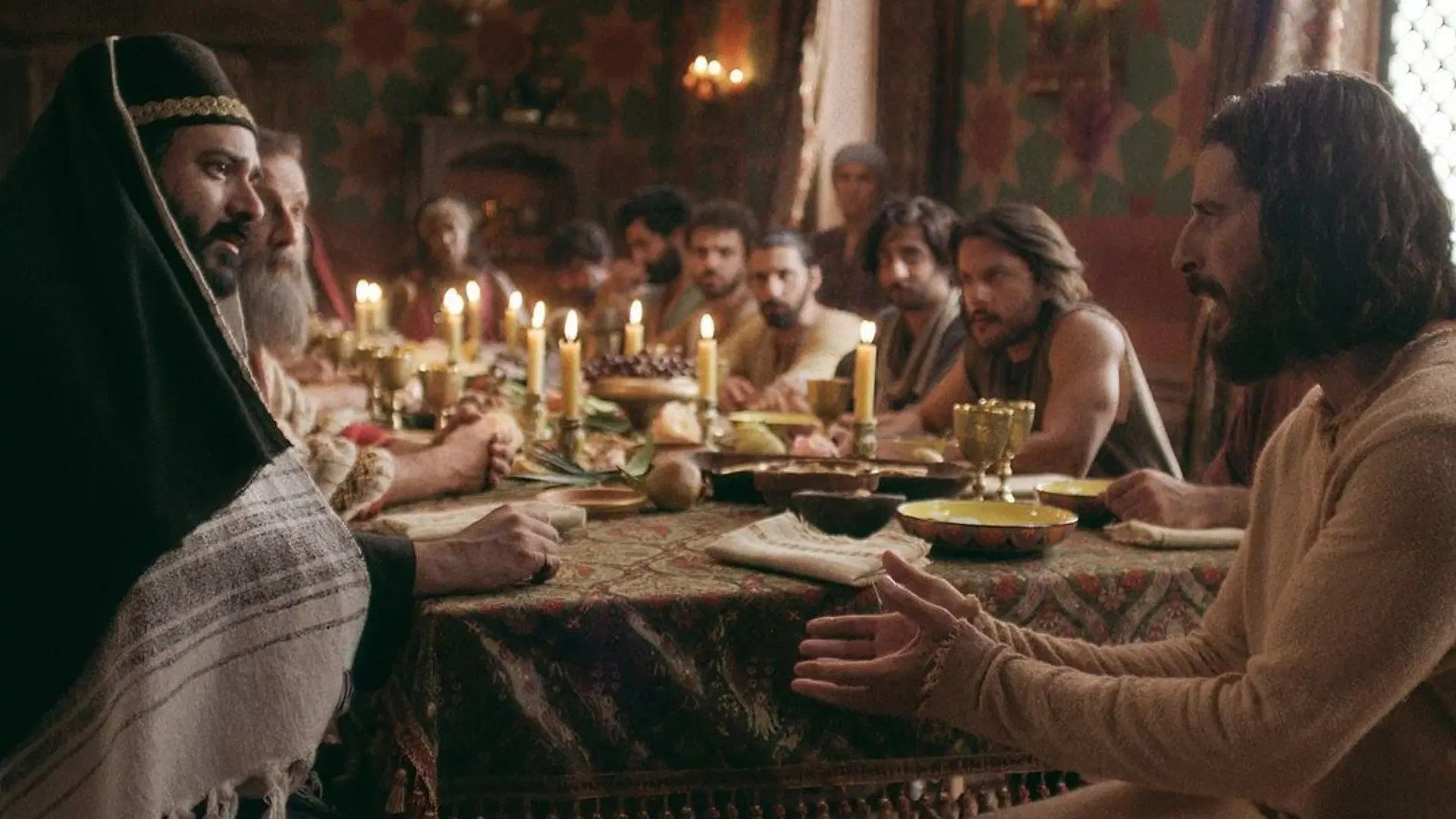
Yussuf and Shmuel visit Jesus at Lazarus’s house in Bethany. Judas is excited to see them, commenting that it looks like a perfect occasion for Jesus to make a “strategic alliance.” Noting the opposition of Caiaphas, Shammai, and other Sanhedrin leaders, Shmuel notes that when Jesus makes his move he’ll have more than just Rome to overthrow.
Jesus asks Shmuel what he’s looking for in a messianic kingdom. He’s looking for a restored Davidic kingdom, with all enemies overthrown and glory again coming to Israel. Judas loves it – he and Shmuel are on exactly the same page.
But Jesus isn’t. He tells the parable of the sheep and the goats. Shmuel is confused. He expects Messiah to identify with highly moral and deeply religious people, people of high character – people just like him! Instead, Jesus is telling of a Messiah who identifies with the poor and outcast. It’s all wrong! It sounds to him like the messianic kingdom Jesus is talking about would have no place for all the things he holds dear: the temple and its rituals, the Law, the feasts.
It’s at this point that Mary comes in and everything comes crashing down. She anoints Jesus’s feet with expensive perfume. Shmuel is horrified – horrified that Jesus lets this woman do this to him, that he would allow himself to be spoken of as if he were God! Judas is horrified that such expensive perfume was wasted when the money could have been put to good use. Everyone else is horrified to hear Jesus refer to the act as her anointing him for his burial.
Shmuel leaves, declaring that he had wanted to believe, but Jesus made that impossible. Judas still believes that “we have an opportunity this Passover to unite over a million of our people” – to overthrow Rome, is the rest of his thought. But now he’s shaken and confused.
Matthew and Zee are sent to get the foal of a donkey for Jesus. The episode shows them making the connection with this animal they are getting for Jesus and the prophecy of Zechariah.
As Jesus prepares to set out for Jerusalem, he asks the disciples if they’re willing to go with him. They are, Peter says, because who else has the words of life (the writers put Peter’s statement from John 6 in this spot).
The episode ends with almost everyone confused, though only a few know they’re confused. Herod and Pilate and the Sanhedrin are worried about an uprising that will cause riots, death, and destruction. The people of Jerusalem, along with (most of?) Jesus’s disciples are expecting an uprising that will overthrow the evil Romans. Atticus and Yussuf don’t seem to know what to expect. Jesus alone knows that he’s heading towards his death.
I don’t think the desire to see a messianic kingdom along the lines Shmuel and Judas look for has receded in succeeding ages. We imagine other enemies of God to be overthrown – the Nazis, the Commies, the Democrats, the Russians, the Republicans, the Woke, the Immoral, etc. But in seeking that kind of Messiah the danger is that we miss Jesus.

 Bandits No More