
When we consider any population, characteristics are not equally distributed to ever member of the population. This is visibly obvious when it comes to height. Every person has some height – they can be measured. Perhaps its also obvious – though not visibly so – that not every person is equally intelligent. When we speak of a characteristic being “distributed” across a population this is not meant to be a claim that some agency has performed an act of distribution. It is the claim that when we look at the population in question we see difference quantities of the quality we’re considering.
One way to picture the distribution of characteristics in a population is a “bell curve” (called that because it looks like a bell) or a “normal” distribution. I knew more details about exactly how this worked back in the previous century when I took statistics in college. In the sample graph below you notice that most of the population is in the middle, with smaller numbers at either extreme.
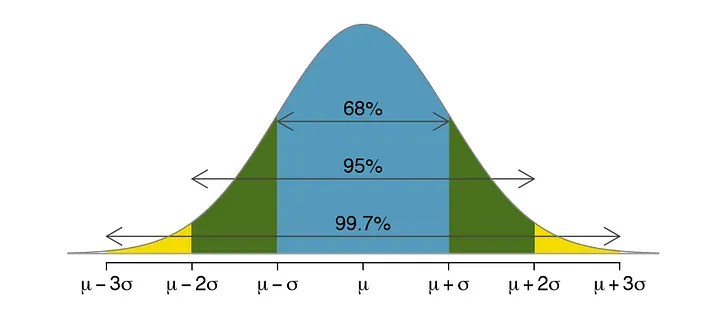
Chances are that the distribution of a characteristic in a population differs depending on the characteristic in question. Some distributions will look “normal,” with the bulk of the population in the center. Others may have bumps at either end and a low spot in the center. Still others may have the largest part of the population at some point other than the center.
I don’t think there is sufficient awareness of this distribution of qualities when we think about people around us and the policies we adopt. Let’s consider something called “success in life.” There are many ways to experience “success in life,” but each of those ways will be effected by a mix of multiple characteristics. I can imagine that characteristics like intelligence, luck, propensity to work hard, relational skill, and connections with other people are some of the characteristics that affect “success in life.”
Some of my assumptions at this point:
- Quantities of each of these characteristics are not equally distributed in each population. People in my town, say, do not each have equal amounts of intelligence, luck, propensity to work hard, relational skill, and connections.
- One’s measure with regard to one characteristic is not guaranteed to be equal to one’s measure with regard to another characteristic. We will tend to be higher in some, lower than others.
- It is common for us to attribute our success in life to only a select number of characteristics. Perhaps these are intelligence and propensity to work hard. We look at our lives. We consider ourselves intelligent. We know that we work hard. Our “success in life,” therefore, must be because of these characteristics.
- Continuing closely on number 3, we also make judgments about other people. If we see them experiencing a degree of “success in life” similar to our own, we easily assume it’s for the same reasons.
- When we look at people who are not experiencing a degree of “success in life” as high as our own it becomes easy to think their failure is due to their lack of the characteristics to which we attribute our own success.
If we have power to determine how societal arrangements are made, it is wise to take these realities into consideration. This means that if someone is undergoing acute or chronic hardship we do them a disservice if we assume their hardship is due to a lack of intelligence or hard work. It might be that they are more intelligent than we are and even work harder than we do, but that they have had worse luck (loss of parents at an early age, poor health, lack of opportunity) or do have the same connections we do. I think of Robert Putnam’s metaphor of “airbags” in his book Our Kids. The idea is that some kids (usually middle class and above) have enough connections that if they make a mistake or suffer a disaster there are people who will come alongside them and help shield them from the full negative consequences of those actions/events. But what about people who’ve grown up without “airbags?”
Let’s think about Jobs. Is it a good thing to have a wide variety of jobs that are available to a wide variety of people? Should we look to build a society where only those with a certain level of intelligence can have a job that suits them? Should only highly intelligent people have a job that pays enough to support a family?
What do you think about the unequal distribution of characteristics in society? Do you think the picture I’ve developed has any applicability to our society and the way we do things?

 Bandits No More